Testing page for app
-
 As of mid-2025, more than 50 CCS facilities are capturing approximately 51 million tons of CO₂ annually, with over 600 additional projects in the pipeline. Yet the success of these efforts rests on a single truth: If we cannot monitor it, we cannot manage it.
 -
The offshore industry is actively embracing a digital-first, low-carbon future, supported by scalable demonstrators, intelligent systems, and integrated engineering approaches now entering precommercial or early-deployment stages.
-
This paper details the formulation and characterization of a novel nanoparticle system composed of polyethyleneimine and dextran sulfate for direct lithium extraction from bulk oilfield brines in North America.
-
Intelligent completions could improve many of the world’s oil and gas wells, but not all are suited to the technology. There is another option.
-
This article is the fourth in a Q&A series from the SPE Research and Development Technical Section focusing on emerging energy technologies. In this piece, David Reid, the CTO and CMO for NOV, discusses the evolution and current state of automated drilling systems.
-
Oil and gas experts encourage human/AI partnerships that can “supercharge” capabilities to create competitive advantages.
-
Casing deformation has emerged as a major challenge in China’s unconventional oil and gas fields, prompting the development of new solutions to address the issue.
-
Updates about global exploration and production activities and developments.
-
-
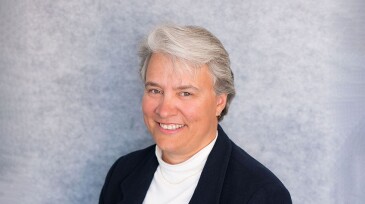
Jennifer Miskimins will take office as 2026 SPE President during the 2025 SPE Annual Technical Conference and Exhibition in October. She shares her views of the challenges facing our industry and SPE members, her outlook for our industry, and what her goals will be during her presidency.



![JPT_2025-09_GuestEd1_SS_382853197[4].jpg](https://assets.spe.org/dims4/default/860913d/2147483647/strip/true/crop/850x475+0+46/resize/365x204!/quality/90/?url=http%3A%2F%2Fspe-brightspot.s3.us-east-2.amazonaws.com%2F8a%2F95%2Fe4e82cb54fd597d497a5b1267f8a%2Fjpt-2025-09-guested1-ss-3828531974.jpg)