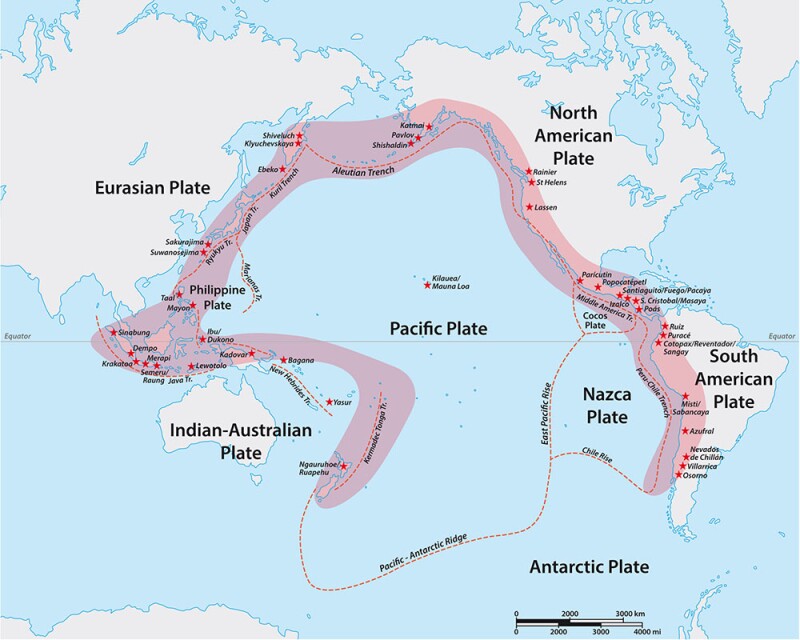
The Pacific Basin’s tectonically active Ring of Fire is a hotspot for volcanic and seismic activity that gifts countries sitting atop this horseshoe-shaped belt of volcanic heat with abundant renewable energy.
Despite this promise, high upfront development costs and competition from subsidized alternatives have limited the global geothermal industry to only a sliver of the renewables market, accounting for less than 1% of total primary energy supply, of which only 0.3% is electricity generation, according to the International Energy Agency (IEA) 2024 report, The Future of Geothermal Energy.

The application of next-generation technologies such as enhanced geothermal systems (EGS) and a growing sense of urgency to quicken the march to net zero are driving change.
Rystad Energy’s latest geothermal economics model suggests capital expenditures in geothermal energy are accelerating and likely to rise by around 20% per year through 2030 (Figs. 1 and 2).


Japan Flexes Muscles With Strategic Investments
Japan, straddling the Ring of Fire and ranking third globally behind the US and Indonesia in geothermal energy resources, is pursuing new investments. These initiatives could potentially deliver 20–23 GW to the island nation’s future grid, according to Japan’s Ministry of Economy, Trade, and Infrastructure (METI).
Japan’s challenge is that it ranks 10th in installed geothermal capacity, producing only around 600 MW, even as Tokyo’s Strategic Energy Plan aims to more than double that to 1.5 GW by 2030.
After commissioning multiple geothermal projects in the 1990s, Japan hit pause for 20 years, hobbled by government regulations spurred by public protests to shield national parks and the hot springs industry from development; hence, the current race to catch up.
The hiatus ended in 2019 with the commissioning of Japan’s first large-scale geothermal project in 2 decades, the 46-MW Wasabizawa Geothermal Power Plant in Yuzawa City, Akita Prefecture. This facility features advanced double-flash technology to boost efficiency by up to 25%, according to Tokyo’s state loan guarantor, Japan Organization for Metals and Energy Security (JOGMEC).
More geothermal plants followed, all based on conventional hydrothermal technologies with slightly different steam-cycle configurations.