

Latest News
-
 Over the course of 2 days, top energy and non-energy executives join OTC Board members to dissect and discuss future and current challenges facing an industry in the beginnings of substantial change.
 -
The addition of human-factors questions to the pool of questions will provide future engineers across the energy sector with an opportunity to gain more knowledge on human factors, human-factors-related regulation, industry guidance, and organizations promoting human factors.
-
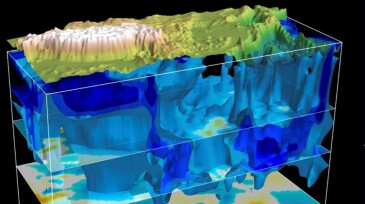
The US Department of Energy’s Office of Fossil Energy and Carbon Management awarded a total of $600,000 to four software developers who won a contest to support FECM’s Science-Informed Machine Learning to Accelerate Real-Time Decisions in the Subsurface Initiative.
-
Incremental gains are not always celebrated, but as two of the biggest oil producers in the US show, they nonetheless can net unrealized savings and new efficiencies.
-
The combined company will have a strengthened position in the Permian Basin, and plans to operate 17 hydraulic fracturing fleets in the region.
-
Thousands of horizontal wells that had been drilled but uncompleted (DUCs) offered a way to maintain production without the cost of drilling more wells, but that resource is finally running low.
-
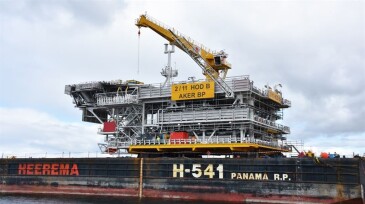
The facility is the second delivered under Aker BP’s platform alliance designed to use a more integrated project delivery model.
-
Most people would agree that society’s first challenge is to shift the world toward a new energy paradigm based on technologies that do not contribute to climate change. But the cold evidence leaves little doubt that this transition is taking longer than we hoped. Consequently, the other challenge is that we need to actively reduce the emissions of the legacy assets t…
-
A new study from Oregon State University found that infants born within 3 km of oil and natural gas drilling facilities in Texas had slightly lower birthweights than those born before drilling began in their vicinity.
-
Remapping of conventional causes of accidents with human-factors guidelines highlighted consistent patterns in the causation of incidents where multiple human-factors criteria were formerly overlooked. This approach has led to changes in incident investigation, putting a focus on causes and providing efficient corrective actions to avoid the recurrence of incidents.
-
Australian E&P rivals will merge to form a $16-billion producer with diverse asset set weighted toward natural gas and LNG.
-
The third quarter has so far not seen any mergers and acquisitions in the shale business that top $1 billion.








Explore Content by Discipline
Trending Content




Get JPT articles in your LinkedIn feed and stay current with oil and gas news and technology.