

Latest News
-
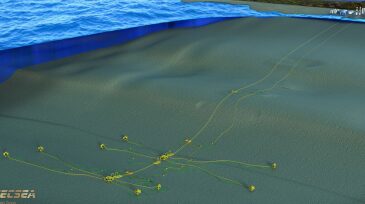
 The motto of the Olympic Games is “Citius, Altius, Fortius,” Latin for “faster, higher, stronger,” which emphasizes the concept of pushing the limits. As an engineer, that approach really speaks to me—and offshore installations, and especially offshore tiebacks, illustrate that concept very well.
 -
Aker BP showcased the Spot robot recently. Spot will be part of the company's initiative that will explore how robotics systems can be used to make offshore operations safer.
-
Eni conducted a research project to explore the maturity of new technologies to enable economical development of deepwater prospects with tieback distances longer than 50 km and 150 km, respectively, for oil and gas fields.
-
This case study describes how gas condensates within a subsea tieback system behave very differently to condensed water from a wet-gas system and therefore a pseudo dry-gas system needs to be configured differently for gas-condensate developments.
-
BP says it is firmly committed to achieving the ambitious target of net-zero greenhouse gas emissions over the next 30 years—even if that means producing less oil and gas.
-
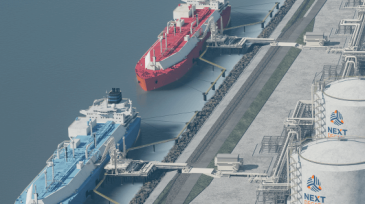
Texas facilities get green light to export LNG. US export capacity is expected to almost double over the next 5 years.
-
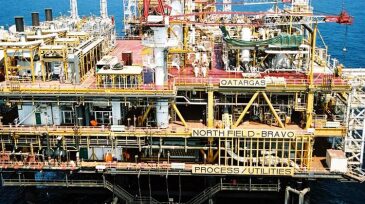
The LNG will come from the offshore Qatargas 4 project in the North Field, a joint venture between Qatar Petroleum and Shell.
-
This paper identifies potentially significant hidden value of subsea multiphase boosting technology, or aspects of it that have not received adequate attention during the field-development decision-making process.
-
The Dalmatian project is a brownfield development and represents the world’s longest multiphase tieback by boosting at some 35 km; the boosting system is installed at approximately 6,000 ft water depth.
-
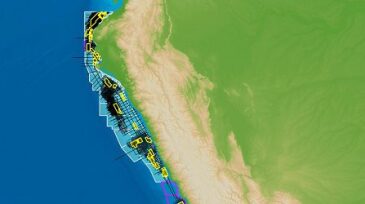
The seismic-data company has announced the completion of its offshore Peru 2D and 3D seismic data set, consisting of 19 rectified and merged 2D seismic surveys and 21 rectified and merged 3D seismic surveys.
-
Sometimes problems turn out to be an opportunity to try something new. In this case, the result was a well design unlike anything most in the shale sector have seen before.
-
In the US Energy Information Administration’s Annual Energy Outlook 2020 reference case, which assumes no new laws and regulations, US energy-related carbon dioxide emissions decrease through the early 2030s before increasing to 4.9 billion metric tons in 2050.







Explore Content by Discipline
Trending Content


Get JPT articles in your LinkedIn feed and stay current with oil and gas news and technology.