

Latest News
-
 API released an updated valve standard for wellhead and tree equipment, which includes new automatic closure requirements.
 -
The deal gives Equinor exploration parcels in the prolific Jeanne d’Arc Basin, near its existing discoveries offshore Newfoundland and Labrador.
-
Research suggests that the formation of the deep plume was unrelated to the addition of subsea dispersants.
-
Scientists have found that man-made structures in the North Sea could play a crucial role in holding coral populations together and increasing their resilience.
-
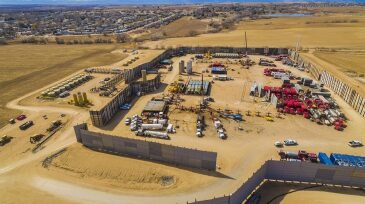
Had Proposition 112 passed, Colorado would have approved the country's largest mandatory buffer between new wells and homes, schools, waterways, and other areas deemed vulnerable: 2,500 ft, five times the existing standard of 500 ft.
-
Wearable devices can notify workers of hazards, provide useful safety data to employers, and improve safety on the worksite.
-
Imperial Oil has made a final investment decision on its 75,000-B/D Aspen oil sands project, the first new oil sands development to be approved in 5 years.
-
Discussions of big data and its management are increasing across our industry and disciplines. This selection of technical papers takes a look at data mining, the ethical issues associated with it, and the status of data-driven methods.
-
The upcoming event will provide the shale sector with a venue to share new learnings and approaches meant to overcome one of its greatest subsurface challenges.
-
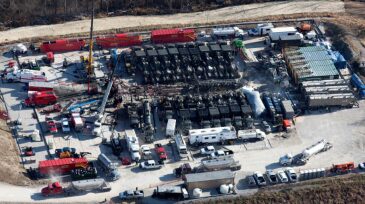
Colorado voters soundly defeated a measure 6 November that would have restricted the vast majority of new development in the country’s fifth largest oil-producing state. The outcome was a big relief for the oil and gas industry, but its existential fight in the state hasn’t ended.
-
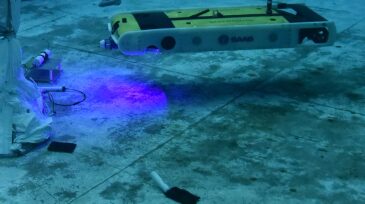
ROVs dominate the world of subsea inspections, maintenance, and repair, but as operators work in a post-downturn economy, autonomous systems have become more in demand. Autonomous inspections are possible today, but how can they help with light and heavy intervention?
-
Research has found that most cyberattacks against the energy and utilities industry transpire and thrive inside enterprise information-technology networks rather than critical infrastructure.




Explore Content by Discipline
Trending Content


Get JPT articles in your LinkedIn feed and stay current with oil and gas news and technology.