

Latest News
-
The principle objective of this research, initiated by the Petroleum Safety Authority, has been to improve the knowledge of safety-relevant indicators in the petroleum industry, in particular related to validity, effectiveness, and reliability.
-
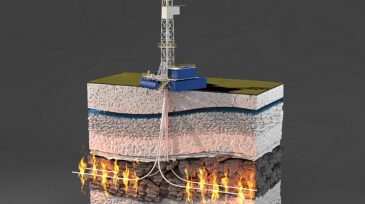
 Stanford geoscientists have found a way to detect thousands of tiny tremors around hydraulic fracturing operations that could serve as predictors of eventual larger earthquakes.
 -
Enduralock’s radial lock fastener is designed for use in high vibration environments. It is reversible and reusable and is compatible with standard socket sizes, allowing for the application of an accurate preload. Its design offers a three-step solution for application: The socket is attached to make the nut free-spinning, the preload is applied, and the socket can b…
-
Offshore project execution enhancement ideas are highlighted for debottlenecking, gas-hydrate-induced pipeline vibration, and the design of subsea systems for efficient startup.
-
The Norwegian model for managing safety in the petroleum sector may seem complicated. The Petroleum Safety Authority has produced an educational guide to the safety regime.
-
The objective of this study was to estimate the economic burden of lung cancer and mesothelioma from occupational and paraoccupational asbestos exposure in Canada.
-
Jack Gerard, president and CEO of API, will step down when his contract ends in August. Gerard joined API in 2008 after serving as president and CEO of the National Mining Association and the American Chemistry Council. He worked in the US Senate and House for almost a decade and is currently active in several civic organizations. In 1990, Gerard helped found McClure,…
-
The workflow aims to reduce the startup time of a subsea production system (SPS). A dynamic integrated model is used to adjust the scheduled SPS startup time. The model evaluates the dynamic simulation response of a large field startup by integrating a reservoir- and gathering-network model.
-
A computational fluid dynamics model is proposed to analyze the effect of hydrate flow in pipelines using multiphase-flow-modeling techniques. The results will identify the cause of pipeline failure, regions of maximum stress in the pipeline, and plastic deformation of the pipeline.
-
Shale gas is one of least sustainable options for producing electricity, according to new research from The University of Manchester, which considered environmental, economic, and social sustainability factors.
-
The Technology Roadmap identifies R&D opportunities that will allow the US to be the leading producer of oil and gas into the future. The importance of technology transfer and time to commercialization is discussed.
-
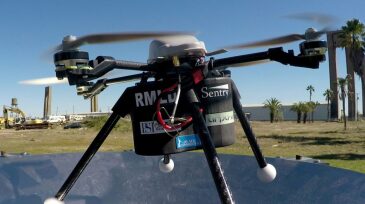
A US-government-sponsored program is putting new methane leak detection systems to the test with a goal of achieving functionality costs of $3,000/year/wellsite while hitting stringent performance criteria.






Explore Content by Discipline
Trending Content




Get JPT articles in your LinkedIn feed and stay current with oil and gas news and technology.