

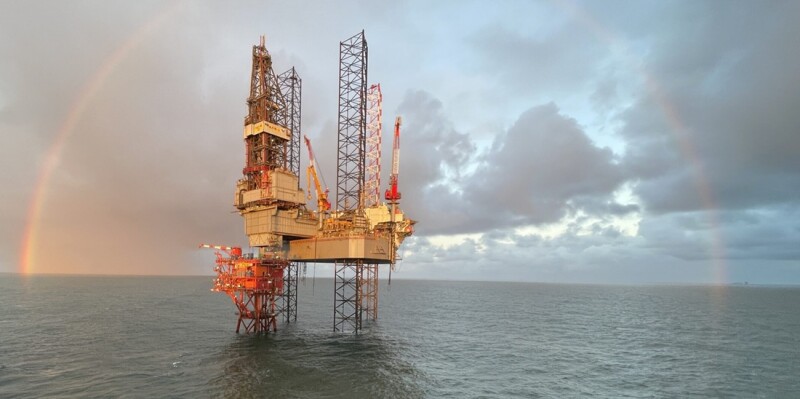
The Porthos carbon-storage project in the North Sea reached an important milestone at the end of January, with work on the wells being completed. Four former gas-production wells have been converted into CO2-injection wells. Three other wells were sealed and permanently removed, meaning the underground access points are now ready for the injection and storage of CO2 deep beneath the seabed.
The wells are vertical pipes that connect the P18-A platform to the depleted gas fields in porous sandstone, 3–4 km below the seabed. Because CO2 injection involves conditions that differ from gas extraction, the wells—as well as the platform—had to be modified. Porthos said a new production system was designed and installed to make the wells suitable for CO2 injection. This system incorporates technology to continuously monitor pressure and temperature.
The work was different for each well. Because the wells had been in use for around 30 years, some pipe sections showed wear and were replaced, Porthos said. In other wells, part of the existing installation could be retained. Technical challenges, such as corrosion in older components, were addressed and resolved, Porthos said.
Porthos outlined several phases for the conversion of the wells. First, the reservoir was secured at depth by placing isolation plugs in the wells so no more natural gas could rise. The wells were then filled with liquid for extra safety and for cleaning. After that, the existing pipes and installations were disconnected and removed from the wells. Material that was still suitable was reused in other projects where possible.
The condition of each well was then thoroughly checked. Ultrasonic measuring equipment was lowered into the wells on an electric cable to examine the quality of the steel and cement. Once it had been established that the wells were in good condition, new pipes and equipment were installed. Finally, new production valves were installed.
The conversion was conducted using the Valaris 123 jackup drilling rig. TAQA, the former owner of the platform and wells during the gas-production period, is the main contractor for the wells and platform. Allseas is the main contractor for the offshore pipelines that will run from the Rotterdam port area to the platform approximately 20 km offshore.
Two wells outside the platform were safely sealed and removed, as was one well from the platform. Multiple tests confirmed the success of the operation, Porthos said. The reservoirs into which the injection will take place have remained untouched. Extensive inspections show that the steel and cement of all wells are in excellent condition.
Air Liquide, Air Products, ExxonMobil, and Shell have signed contracts with Porthos for transport and storage of CO2.
The final investment decision for Porthos was made in October 2023, and construction of the infrastructure began in 2024. Work on the platform and onshore is ongoing, and the first CO2 injection is planned for the autumn of 2026.