

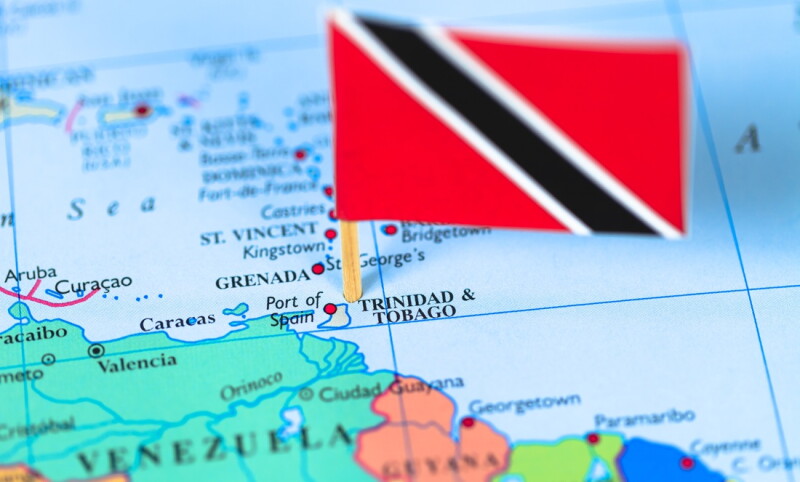
Shell has frozen its Aphrodite natural gas project in Trinidad and Tobago after failing to agree on sales terms for the development’s 100 million ft3/D of natural gas output with state-owned National Gas Company (NGC), the country’s gas aggregator supplying the domestic market and the Atlantic LNG facility, of which Shell holds a 45% interest.
Having greenlit the project with a final investment decision in June 2025, Shell is now shelving it, Reuters reported on 24 August, citing “three people familiar with the decision.”
Shell confirmed the report in a statement to Reuters, saying, “Shell is in ongoing negotiations and confirms that the initial rig slot for Aphrodite has been released. The company will continue to evaluate the overall integrated project schedule.”
Shell had targeted first gas for 2027, but the release of the jackup drilling rig that would have drilled the production wells calls that target into question. The jackup rig contractor has not been identified.
NGC chairman Gerald Ramdeen told The Trinidad and Tobago Guardian that negotiations with Shell remain ongoing.
Big Hopes for Aphrodite
The Aphrodite field, discovered in 2022, is in the East Coast Marine Area, Block 5a, offshore Trinidad and Tobago.
The only publicly announced contract related to the project is Shell’s June 2025 award to Subsea7 for transportation and installation of subsea equipment at Aphrodite in water depths of up to 290 m, Subsea7 announced in a news release at the time.
Aphrodite had been considered an option to backfill the Atlantic LNG facility—Latin America’s largest liquefaction facility—strengthen Trinidad and Tobago’s domestic gas market, and supply local petrochemical and power-generation sectors.
Declines in domestic production have caused Atlantic LNG’s output to fall below its 4.2 Bcf/D nameplate capacity by 2.7 Bcf/D, forcing the closure of Train 1 and creating a cascade of decisions to idle some petrochemical plants, according to BNamericas.
Trinidad expects soon to access gas from neighboring Venezuela as Shell and BP (which hold equal 45% stakes in the Atlantic LNG facility) seek licenses for cross-border gas developments to produce Venezuelan gas for transport to Trinidad for processing and export.
In August, the Venezuelan government awarded BP an exploration and production license to operate Phase 2 of the Loran field in the Plataforma Deltana area. BP plans to partner with XRG, ADNOC’s international energy investment company, and Qatari-based UCC Oil and Gas Holding, with each holding an equal stake in Loran Phase 2, which contains an estimated 4 Tcf of recoverable gas resources, BP said in a news release.