

formation evaluation
-
 This paper aims to establish a set of best practices for generating particle-size-distribution data from core samples.
 -
By integrating experimental and mathematical modeling approaches, this work aims to advance the understanding of sand-detachment dynamics and formation instability under varying saturation conditions.
-
This paper presents laboratory-testing methods and evaluation criteria designed to improve understanding of both the origin and extent of formation damage associated with CO2 injection.
-
This work presents an evaluation for carbon capture, utilization, and storage projects in the UAE for two wells in a saline water aquifer with respect to caprock integrity and water sampling.
-
This work introduces an analytical model for nonisothermal CO2 injection that accounts for both Joule-Thomson cooling and interformation heat exchange.
-
The current free collections presented by the online library examine artificial lift and various aspects of reservoir evaluation.
-
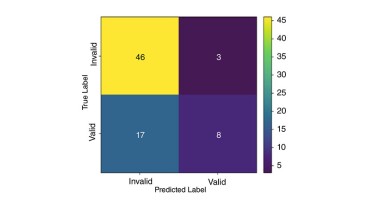
This paper introduces a machine-learning approach that integrates well-logging data to enhance depth selection, thereby increasing the likelihood of obtaining accurate and valuable formation-pressure results.
-
The company’s new Retina imaging system creates high-resolution borehole images at the drill bit.
-
Fundamental research conducted to derive a transport model for ideal and partitioning tracers in porous media with two-phase flow that will allow fast and efficient characterization and selection of the correct tracer to be used in field applications.
-
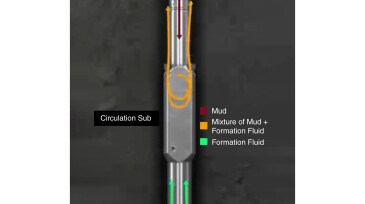
This paper addresses the challenges related to well control and the successful implementation of deep-transient-test operations in an offshore well in Southeast Asia carried out with the help of a dynamic well-control-simulation platform.




Page 1 of 3