FPSO
-
 New local content regulations could speed up the pace of presalt oil production by more than 21 billion bbl by the mid-2020s. Karoon and Parnaíba Gás Natural are the first companies to apply to change their contract terms. Petrobras, Shell, BP, ExxonMobil, Petrogal, and Anadarko are also interested.
 -
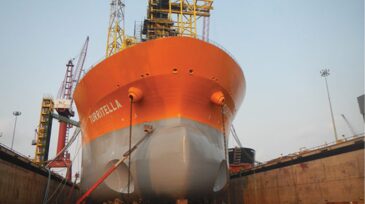
The Turritella FPSO (Fig. 1 above) is the deepest floating production system in the world and presented many challenges to successful execution of the surface host facilities.
-
The long-term decommissioning of the historic Brent field has necessitated redevelopment of the younger Penguins field in the North Sea, where the UK hopes to see more revival projects in the coming years.
-
30 years after being discovered in the North Sea, this heavy-oilfield is now flowing.
-
Despite major advancements in deepwater projects in the Gulf of Mexico, FPSO usage has yet to increase.
-
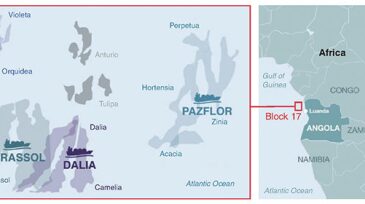
This paper describes the CLOV deepwater megaproject in Block 17 offshore Angola, which cost USD 8.4 billion to first oil.
-
A routine maintenance project became more complicated when an ROV inspection exposed unexpected trenching that reduced the holding capacity of the system.
-
Espirito Santo: Design and Operational Experience of the Use of Steel Risers on a Turret-Moored FPSOThe floating production, storage, and offloading (FPSO) facility Espirito Santo, located offshore Brazil in the Parque das Conchas (BC-10) field, is the world’s first turret-moored FPSO facility to use steel risers for fluid transfer.
-
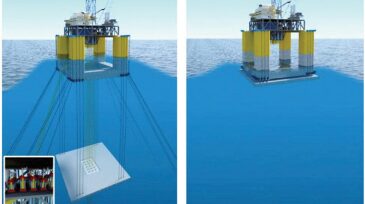
This paper describes the measures put in place so that the mooring system of the Gryphon Alpha FPSO could be replaced and reconnected on an efficient schedule.
-
Semisubmersible floating production systems (SFPSs) with steel catenary risers (SCRs) are attractive field-development solutions, especially in deeper water of Western Australia. However, SCR design is challenging in the offshore Western Australia environment because of severe cyclonic environments.