FPSO
-
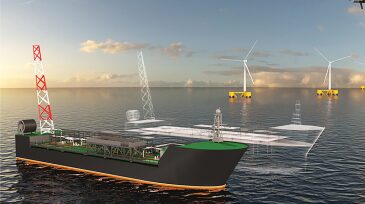
 While it remains today only an idea, there are but a few barriers keeping an unmanned floater from being realized, according to one of the world’s leading offshore engineering firms.
 -
Vår Energi is looking to extract another 136 million BOE from the Balder Field. Production is anticipated in 2H 2022.
-
In its push to boost deepwater production, Petrobras is aiming to launch a leasing tender to build an FPSO described as Brazil’s largest-ever oil platform. Decommissioning work begins in the Campos and the Sergipe-Alagoas Basins.
-
The Búzios-5 production system is planned to include the interconnection of 15 wells to a floating production, storage, and offloading vessel in two phases.
-
Awards are expected to recover to seven vessels next year. Over the past 10 years, only 2016 saw a lower level of activity when not a single FPSO contract was awarded.
-
A recent test proved the feasibility of using LiDAR on remote-controlled drones to create 3D maps of the inside of tanks, increasing the safety and efficiency of inspections.
-
The FPSO vessel will reduce capital expenditure and breakeven costs and increase commercially feasibility, leading to FID.
-
Work has resumed on Energan’s Singapore FPSO; subsea installation for the Karish project continues as planned.
-
The fire at the Terra Nova FPSO comes 6 months after C-NLOPB found Suncor noncompliant with regulatory requirements and suspended operations.
-
FPSO sanctioning is at a minimum and few opportunities remain for FPSO suppliers to find new work and redeploy their vessels. Suppliers may be forced to accept day rate reductions in order to keep their vessels working.