safety
-
 In this SPE Live, recorded at SPE’s Annual Technical Conference and Exhibition, HSES Technical Director Sue Staley talks with Norman Ritchie, director at vPSI Group, about the industry transitioning to learning before accidents occur.
-
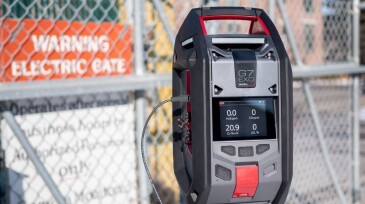
The device allows for increased worker safety by monitoring surroundings and connecting to managers in real time.
-
The project would evaluate oil and gas extraction workers’ sleep, fatigue, and other related factors, as well as their relationship to industry-associated risks.
-
Proposed revisions to 2019 Well Control Rule aim to bolster safe and environmentally responsible energy operations.
-
"Our safety record is unacceptable, and improvements must be made," Kris Smith said.
-
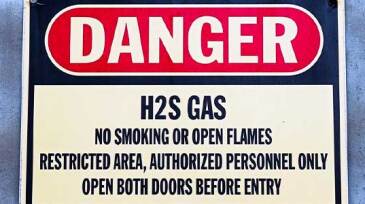
Given that hydrogen sulfide is such a risk to workers, care must be taken to protect and prevent exposure, particularly when working with lesser-known methods and in more dangerous settings, such as sour-gas fields and the sweetening process.
-
Connected safety is growing, including in the oil patch. And it is tied to the wearable technology so prevalent today.
-
The two organizations recently signed a letter of cooperation. The agreement creates an opportunity to accelerate the practical application of human factors in the energy industry and create a bridge between energy industry professionals and human factors experts.
-
Together in Safety’s recent report “Future Fuels Risk Assessment” uses operational scenarios across industries to evaluate the safety implications of using methanol, LNG, hydrogen, and ammonia as fuel.
-
The International Association of Oil and Gas Producers has published its annual safety report for 2021. The report shows an increase in fatalities to 20 from 14 in 2020.