AI/machine learning

After years of market shocks, technological breakthroughs, and rising uncertainty, ATCE 2026 will provide new insights on how industry leaders and technical experts are preparing for the next era of the upstream business.

This research focuses on combining physics-based expert rules with machine learning to improve the detection of failure-related events in electrical submersible pumps.

This paper presents the deployment of an artificial intelligence-enabled autonomous gas lift optimization system, integrating real-time centralized advanced process control with cloud-based analytics to enhance artificial gas lift performance in producer wells.
-
 With recent advances in AI being enabled through access to so much big data and cheap computing power, there is incredible momentum in the field. Can big data really deliver on all this hype, and what can go wrong?
 -
The industrial Internet of Things (IoT) is changing the way the oil and gas industry operates, but are companies leveraging it to its full potential? What strategies are being employed to handle the obstacles to implementation? Finding value in people plays a role in integrating IoT into operations.
-
The artificial-intelligence application BHC3 Reliability provides early warning of production downtime and process risk to improve operational productivity, efficiency, and safety.
-
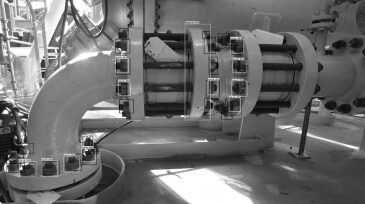
Using machine learning (ML), image recognition, and object detection, the use of ML on algorithms to recognize objects and describe their condition were investigated—offering new possibilities for performing inspection and data gathering to evaluate the technical condition of oil and gas assets.
-
The combination of digital technologies will enable Chevron—and, eventually, other companies—to process, visualize, interpret, and glean insights from multiple data sources, the companies said.
-
Blending smart-proxy models with data-driven models to create hybrid models is not always the best idea for physics- and engineering-related applications.
-
Equinor is working on a natural language processing tool that could combine data sources and help planners anticipate the issues that affect onsite operational safety.
-
Even the most powerful computers are still no match for the human brain when it comes to pattern recognition, risk management, and other similarly complex tasks. A new approach, however, could enable parallel computation with light, simulating the way neurons respond in the human brain.
-
Artificial intelligence tools present many opportunities for the energy industry, and, as technological concepts leave the realm of science fiction, companies have started to grasp what is possible. What roles do culture and ethics play in helping companies understand the digital revolution?
-
Recently, AI researchers from Microsoft open-sourced the Decentralized & Collaborative AI on Blockchain project that enables the implementation of decentralized machine-learning models based on blockchain technologies.