

AI/machine learning

The deals, with a potential value exceeding $3.7 billion, are aimed at strengthening Saudi Aramco’s supply chains and expanding its use of industrial artificial intelligence.

This work applies fuzzy logic, a well-established artificial-intelligence technique, to quantitatively assess connectivity between injectors and producers in a giant presalt field in the Santos Basin of Brazil.

The DOE-backed EGS-Twin project aims to simulate geothermal production systems, helping operators better predict performance and maximize output.
-
 Tiny soil samples may contain as many as 300,000 species of microbial life, but a Netherlands-based startup has figured out that between 50 and 200 of them can tell an operator if a drilling location will hold oil and gas reserves.
 -
Southwest Research Institute is working to improve the accuracy of pipeline leak detection using sensors, artificial intelligence, and deep learning.
-
As artificial intelligence makes a significant impact on various industries, an expert examines the roles it could play in streamlining oil and gas operations in the near future.
-
A consultant examines the ways in which artificial intelligence and machine learning solutions may have a significant impact on industry operations.
-
As the drilling industry improves its efforts to capture drilling operation activities in real time, it has generated a significant amount of data that drilling engineers cannot process on their own.
-
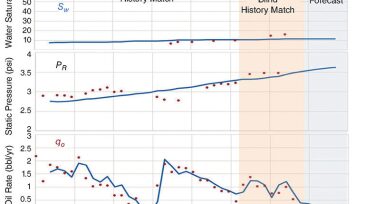
Young Technology Showcase—Top-Down Modeling: A Shift in Building Full-Field Models for Mature FieldsData-driven, or top-down, modeling uses machine learning and data mining to develop reservoir models based on measurements, rather than solutions of governing equations.





Page 48 of 48