AI/machine learning

The deals, with a potential value exceeding $3.7 billion, are aimed at strengthening Saudi Aramco’s supply chains and expanding its use of industrial artificial intelligence.

This work applies fuzzy logic, a well-established artificial-intelligence technique, to quantitatively assess connectivity between injectors and producers in a giant presalt field in the Santos Basin of Brazil.

The DOE-backed EGS-Twin project aims to simulate geothermal production systems, helping operators better predict performance and maximize output.
-
 This guest editorial explores the rise of agentic AI and its potential effect on oil and gas professionals.
 -
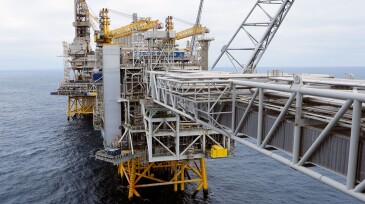
The Norwegian major said it is using artificial intelligence for predictive maintenance throughout its facilities and for interpretation of seismic data from the Norwegian continental shelf.
-
This paper explores the evolving role of the digital petroleum engineer, examines the core technologies they use, assesses the challenges they face, and projects future industry trends.
-
This paper describes an auto-adaptive workflow that leverages a complex interplay between machine learning, physics of fluid flow, and a gradient-free algorithm to enhance the solution of well-placement problems.
-
This paper presents a novel application of artificial intelligence in computer vision for automating blowout-preventer pressure-chart-data extraction, demonstrating significant efficiency gains and a high return on investment.
-
Are we in an AI bubble? The question may seem academic to petroleum engineers who are already capitalizing on the momentum of digitalization across the industry, yet any engineer, regardless of their career stage, could be forgiven for feeling overwhelmed by the sheer scope of specialized skills now demanded in this rapidly evolving digital landscape.
-
This work presents the development of fast predictive models and optimization methodologies to evaluate the potential of carbon-dioxide EOR and storage operations quickly in mature oil fields.
-
The authors of this paper apply a deep-learning model for multivariate forecasting of oil production and carbon-dioxide-sequestration efficiency across a range of water-alternating-gas scenarios using field data from six legacy carbon-dioxide enhanced-oil-recovery projects.
-
Aurora Innovation and Detmar Logistics have inked a deal for 30 autonomous trucks that will begin hauling sand in the region next year.
-
Sustainability in reservoir management emerges not from standalone initiatives but from integrated, data-driven workflows, where shared models, closed-loop processes, and AI-enabled insights reduce fragmentation and make sustainable performance a natural outcome.