AI/machine learning

Known as Arena, the collaboration aims to improve decision-making across increasingly complex reservoirs and growing volumes of subsurface data.

Robotic and autonomous systems are transforming energy operations, but their full value emerges only when paired with data science, engineering analytics, and AI/ML to turn data into decisions. The transition of the SPE Robotic & Autonomous Systems Technical Section into the SPE Data Science & Engineering Analytics Technical Section helps bridge this critical technolo…
A credible custody-transfer record depends on far more than the accuracy of a single meter. It is the product of an integrated measurement chain. While meter performance supports measurement-system integrity, commercial confidence also depends on traceability, governance, and authorization.
-
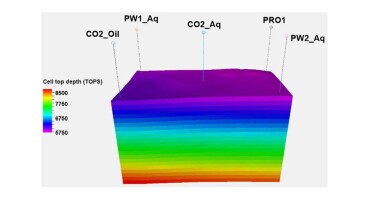
 This paper presents a novel workflow with multiobjective optimization techniques to assess the integration of pressure-management methodologies for permanent geological carbon dioxide storage in saline aquifers.
-
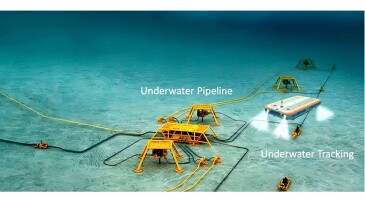
This paper introduces a technology for offshore pipeline inspection centered on an autonomous robotic system equipped with underwater computer vision and edge-computing capabilities.
-
Deploying artificial intelligence across an enterprise requires thinking beyond the pilot.
-
The fifth edition of the SPE Europe Energy GeoHackathon, beginning on 1 October, focuses on how data science can advance geothermal energy and drive the energy transition.
-
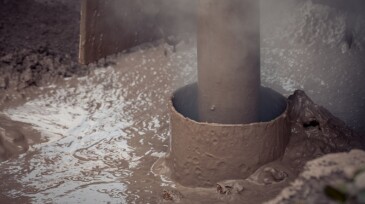
This paper presents the development of a robust, physics-based, and data-driven workflow for modeling mud loss in fractured formations and predicting terminal mud loss volume and time, as well as equivalent hydraulic fracture aperture.
-
This study integrates physics-based constraints into machine-learning models, thereby improving their predictive accuracy and robustness.
-
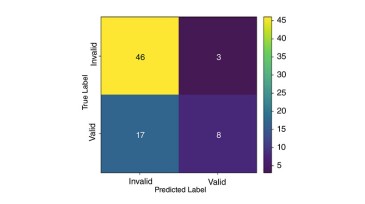
This paper introduces a machine-learning approach that integrates well-logging data to enhance depth selection, thereby increasing the likelihood of obtaining accurate and valuable formation-pressure results.
-
This study aims to use machine-learning techniques to predict well logs by analyzing mud-log and logging-while-drilling data.
-
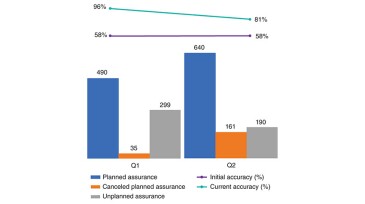
This paper describes a tool that complements predictive analytics by evaluating top health, safety, and environment risks and recommends risk-management-based assurance intervention.
-
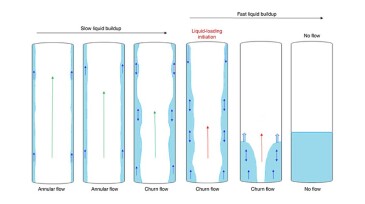
This work introduces a fast, methodical approach to detect liquid loading using easily available field data while avoiding traditional assumptions and to determine critical gas rates directly from field data.