AI/machine learning

This research focuses on combining physics-based expert rules with machine learning to improve the detection of failure-related events in electrical submersible pumps.

A combination of physics principles and machine-learning techniques is used in this work to develop a virtual flowmeter for oil-production optimization in electrical-submersible-pump-lifted oil wells, resulting in reliable generalization.

This paper presents the deployment of an artificial intelligence-enabled autonomous gas lift optimization system, integrating real-time centralized advanced process control with cloud-based analytics to enhance artificial gas lift performance in producer wells.
-
 The fifth edition of the SPE Europe Energy GeoHackathon, beginning on 1 October, focuses on how data science can advance geothermal energy and drive the energy transition.
 -
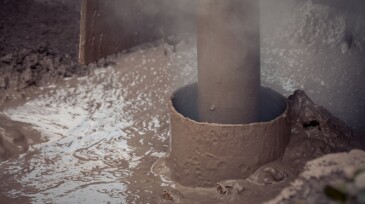
This paper presents the development of a robust, physics-based, and data-driven workflow for modeling mud loss in fractured formations and predicting terminal mud loss volume and time, as well as equivalent hydraulic fracture aperture.
-
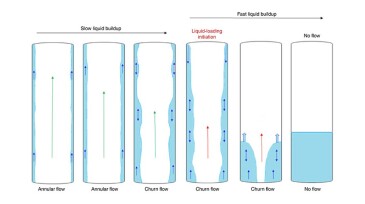
This work introduces a fast, methodical approach to detect liquid loading using easily available field data while avoiding traditional assumptions and to determine critical gas rates directly from field data.
-
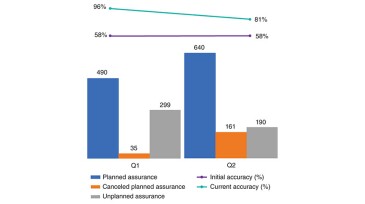
This paper describes a tool that complements predictive analytics by evaluating top health, safety, and environment risks and recommends risk-management-based assurance intervention.
-
This study integrates physics-based constraints into machine-learning models, thereby improving their predictive accuracy and robustness.
-
This paper introduces a machine-learning approach that integrates well-logging data to enhance depth selection, thereby increasing the likelihood of obtaining accurate and valuable formation-pressure results.
-
This study aims to use machine-learning techniques to predict well logs by analyzing mud-log and logging-while-drilling data.
-
Traditionally, the drilling industry has relied on high-fidelity thermal simulators to predict downhole temperature for different operational scenarios. Though accurate, these models are too slow for real-time applications. To overcome this limitation, a deep-learning solution is proposed that enables fast, accurate prediction of downhole temperatures under a wide ran…
-
The Energy and AI Observatory aims to use up-to-date information on energy demand from data centers to determine how artificial intelligence is optimizing the energy sector.
-
As carbon capture scales up worldwide, the real challenge lies deep underground—where smart reservoir management determines whether CO₂ stays put for good.