

Artificial lift

Honorees Rajan Chokshi and Mike Poythress say the guidance they received, and later shared with others, helped shape decades of innovation and leadership in artificial lift.

As digital technologies become commonplace, industry leaders say core engineering knowledge remains essential for making informed decisions and avoiding costly mistakes.
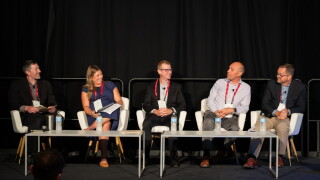
While equipment run life and reliability remain core concerns, experts say operators are increasingly turning to real-time surveillance and autonomous optimization to unlock new production gains.
-
 This article from the SPE Artificial Lift Technical Section highlights a positive reality of our industry, one that centers on connecting and collaborating for success.
 -
This case study describes how edge computing and industrial internet of things platforms were deployed to automate and optimize production operations across four distinct basins.
-
This paper proposes a novel, real-time pump failure prediction method using machine learning with scaled load ratio to accurately predict pump failures using only surface pump load data.
-
Production delivered by the subsea artificial lift system will equal that obtained by drilling two new wells, according to BP.
-
Examples demonstrate how an Integrated Operations Center as a Service (IOCaaS) model, powered by artificial intelligence, reduced costs by 5% and increased production by 6% in Canada.
-
This paper demonstrates the effectiveness of integrating dynamic gas separation with existing gas-avoidance methods within the same electrical submersible pump string to address these issues.
-
Leaders of SPE’s Artificial Lift Technical Section outline the group’s mission, recent technical highlights, and a growing slate of global events shaping the future of artificial lift.
-
This paper presents a robust workflow to identify optimization opportunities in gas lift wells through real-time data analysis and a surveillance-by-exception methodology.
-
To overcome operational constraints tied to ball-and-seat valves, an operator tested a spring-loaded alternative downhole.
-
Field results highlight how rethinking tubing-anchor-catcher design can reduce gas interference and support late-life production.



Page 1 of 17