Artificial lift

Honorees Rajan Chokshi and Mike Poythress say the guidance they received, and later shared with others, helped shape decades of innovation and leadership in artificial lift.

As digital technologies become commonplace, industry leaders say core engineering knowledge remains essential for making informed decisions and avoiding costly mistakes.

While equipment run life and reliability remain core concerns, experts say operators are increasingly turning to real-time surveillance and autonomous optimization to unlock new production gains.
-
 What is the one thing you can do that will provide the greatest benefit to your artificial lift operations? For me, the answer to that question is simple: focus on surveillance. Surveillance is the foundation of any artificial lift optimization program. Effective surveillance practices allow you to keep track of how your system is performing against predefined targets…
 -
The paper describes a project automating the progressing-cavity-pump well-modeling process wherein models are built and sustained automatically in a well-management system for all active PCP wells.
-
SponsoredEach well drilled, stimulated, and completed represents a significant investment in time, resources, and expenses. From artificial lift system design to maintenance scheduling, maximize your investment by ensuring optimal flow and production throughout the life cycle.
-
An experimental study of a shroud-type downhole separator for a pumped horizontal or deviated well is presented in this study.
-
Do you know how many of your organization’s wells are artificially lifted? Or, more importantly, do you know what fraction of your production volumes are dependent on artificial lift? I would wager that the percentages are higher than you would expect, and I encourage you to seek out that information and share it.
-
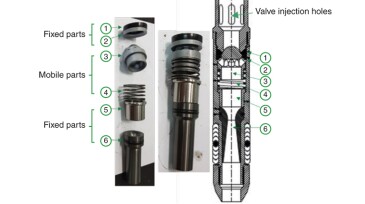
This paper describes a comprehensive approach to mitigate systemic failure in gas-lift valves in presalt wells.
-
This paper describes a study aiming to provide input for the well-completion-strategy design and operational parameters for a carbonate reservoir experiencing electrical-submersible-pump failures.
-
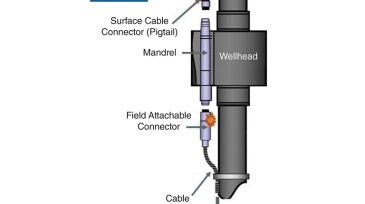
This paper describes the findings of a root-cause analysis of wellhead-penetrator failures in Canadian steam-assisted gravity-drainage operations and the mitigation measures taken.
-
This paper discusses the field implementation of a downhole chemical methodology that has positively affected overall productivity for a mature Kuwait field.
-
SponsoredRod lift failure frequency in horizontal wells drives significant operating expenses. Understanding why these failures occur leads to a solution — production optimization with automated setpoint changes, which can extend the life of this equipment and reduce downtime.