Business/economics

After years of market shocks, technological breakthroughs, and rising uncertainty, ATCE 2026 will provide new insights on how industry leaders and technical experts are preparing for the next era of the upstream business.

This guest editorial examines why geothermal projects require a different planning, financing, and development approach than traditional oil and gas projects.

As the pace of new discoveries slows and high-quality prospects become harder to find, oil companies may need to rely more heavily on mature fields to maintain production and support future supply.
-
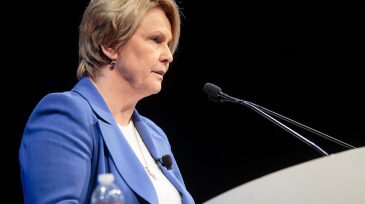
 Business Development VP Kirstie Boyle joins The SPE Podcast to talk startups. Recently part of a $4.5-million funding round, Kirstie shares what makes Interface Fluidics flow.
 -
Equinor has chosen four suppliers for inspection services on all offshore installations on the Norwegian Continental Shelf and onshore plants in Norway. The frame agreements, estimated at $383 million, are scheduled to be signed soon.
-
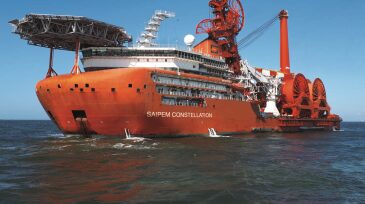
Bloomberg reports that Saipem is seeking to bulk up and weather an industry downturn. A potential deal could create an oilfield service giant with more than $12.4 billion in revenue.
-
Macroeconomic and business risks, investor uncertainty, and the energy transition highlight the challenges outlined in the report.
-
The bank funded some €2 billion in projects last year.
-
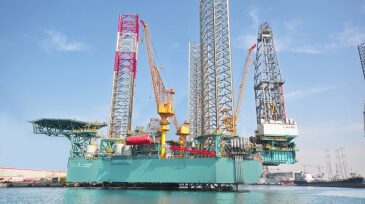
ADNOC’s drilling subsidiary has increased its rig fleet to 95 and plans to add “dozens” more by 2025.
-
Annual report says that governments have the greatest capacity and responsibility to shape the energy future.
-
Occidental Petroleum has closed on deals totaling $1.7 billion as part of its divestment program following its $38-billion takeover of Anadarko Petroleum.
-
The long-struggling shale operator’s share price on 12 November closed at 67¢/share, a 25-year low.
-
The deal, first announced in May, gives the Delek subsidiary 10 additional producing field interests in the UK North Sea, boosting its 2019 production by 300%.