Carbon capture and storage

This paper presents an experiment investigating dissolution of basaltic primary minerals and conditions favorable for secondary phase formation under deep subsurface storage conditions.

This study aims to investigate the efficacy of chemical additives strontium chloride and barium hydroxide in accelerating CO₂ trapping mechanisms, their effect on dissolution of carbonate-bearing minerals, and resulting poroelastic changes in the host rock.

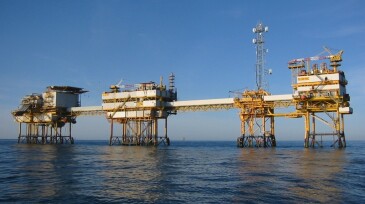
This paper describes the potential of combined-cycle technology (use of a gas turbine and a steam turbine together to turn fuel into electricity) in offshore carbon-capture applications.
-
 With the advancement of a legal framework for carbon capture and storage, Brazil is building CCS momentum. This article aims to shed light on what led to this momentum and what may come next.
 -
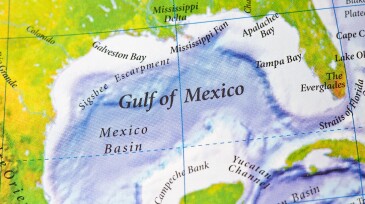
The Gulf region can leverage its energy history, infrastructure, capacity, and expertise to lead the energy transition.
-
The project aims to store 5 million tons of CO₂ annually, equivalent to a third of the total CO2 emissions from Dutch domestic vehicles in 1 year.
-
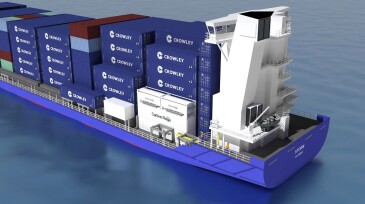
A pilot project will explore onboard carbon capture for container ships, and two heavy-hitters are teaming up to find decarbonization paths in the Asia Pacific region. Elsewhere, wind and solar are on track to pass coal in the race to generate electricity.
-
The memorandum of understanding aims to improve digital work flows in the emerging carbon capture and storage industry.
-
A surge in permit applications for long-term carbon storage sites reflects where industrially produced carbon dioxide can be harvested, and where the necessary pipelines are.
-
The captured carbon dioxide will be permanently sequestered in the Cameron Parish CO2 Hub to be located offshore Louisiana.
-
Several projects have been scrapped across the US as inflation causes project costs to soar, while projects in Costa Rica and Rotterdam move forward.
-
New York-based BlackRock will put more than half a billion dollars into Occidental's first direct air capture project, which is now 30% completed.
-
In the US, localized opposition and regulatory uncertainty are threatening to kill or severely limit the use of carbon capture, use, and storage (CCUS) in the fight against climate change.