Carbon capture and storage

This paper presents an experiment investigating dissolution of basaltic primary minerals and conditions favorable for secondary phase formation under deep subsurface storage conditions.

This study aims to investigate the efficacy of chemical additives strontium chloride and barium hydroxide in accelerating CO₂ trapping mechanisms, their effect on dissolution of carbonate-bearing minerals, and resulting poroelastic changes in the host rock.

This paper describes the potential of combined-cycle technology (use of a gas turbine and a steam turbine together to turn fuel into electricity) in offshore carbon-capture applications.
-
 The initial phase of the carbon capture and storage project has a capacity of 1.5 million tonnes per year, with a second phase—due online in 2028—expected to bring the storage capacity to 5 million tonnes per year.
 -
BlackRock’s Global Infrastructure Partners moves to buy nearly half of the stake in Eni's CCUS subsidiary.
-
From 26 to 27 August, industry executives, policymakers, financiers, researchers, and technologists will gather in Malaysia to explore the full potential of CCUS.
-
The author writes that Brazil can benefit by mirroring what proved decisive for CCS deployment in the US through a sovereign fiscal regime anchored by monetizing verified storage.
-
The collaboration will see TGS’ software platform implemented throughout the carbon value chain at the Northern Lights project.
-
With Brazil enacting South America’s first carbon capture and storage (CCS) law, this article examines the technical and regulatory architecture required to scale CCS deployment and provides exclusive insight into Brazil’s accelerating CCS landscape.
-
A new paper from researchers at Heriot-Watt University outlines key advances in chemistry that are driving the push in carbon capture technology.
-
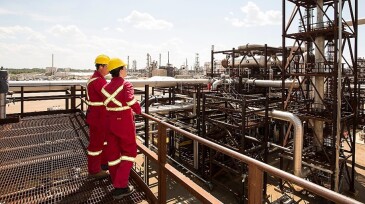
The companies have signed an agreement to deliver carbon captured using Shell’s Cansolv system.
-
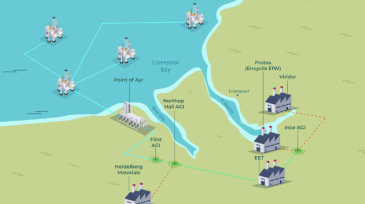
The North Sea project will transport and permanently store up to an initial 4 million metric tons of carbon dioxide per year, with startup expected in 2028.
-
The CCUS eMentoring Program connects mentors and mentees, offering valuable insights, networking opportunities, and career advancement for both. Join the CCUS eMentorship program to share knowledge, grow together, and shape the future of CCUS.