Carbon capture and storage

This paper presents an experiment investigating dissolution of basaltic primary minerals and conditions favorable for secondary phase formation under deep subsurface storage conditions.

This study aims to investigate the efficacy of chemical additives strontium chloride and barium hydroxide in accelerating CO₂ trapping mechanisms, their effect on dissolution of carbonate-bearing minerals, and resulting poroelastic changes in the host rock.

This paper describes the potential of combined-cycle technology (use of a gas turbine and a steam turbine together to turn fuel into electricity) in offshore carbon-capture applications.
-
 Decarbonation has maintained its attraction, as observed from the past year of papers reviewed for this feature. Regarding CCS, challenges have been addressed through various techniques, including laboratory experiments; modeling studies; and field-scale application testing, monitoring, and risk assessment; as well as value chain and economic analysis.
 -
The SPE Reservoir Technical Discipline and Advisory Committee invite their Reservoir members worldwide to participate in a new survey aimed at assessing the current state of reservoir engineering across industry and academia. Deadline is 21 July 2025.
-
The contractor will deliver a similar carbon dioxide injection system to the one it completed for phase one in 2023.
-
The Carbon Capture, Utilization, and Storage (CCUS) Technical Section is proud to announce the launch of its new eMentoring Program forward-thinking initiative designed to connect young professionals with seasoned experts across the CCUS industry. This virtual mentorship effort aims to fast-track knowledge transfer, foster professional development, and build a stronge…
-
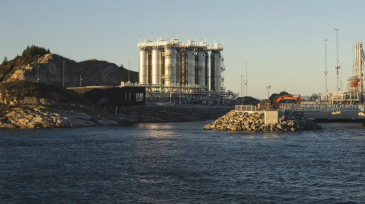
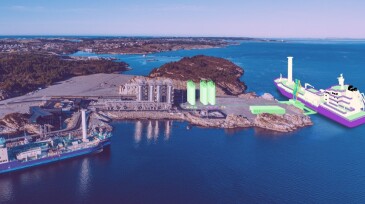
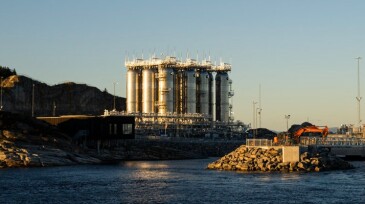
The Norwegian Ministry of Energy has approved the Phase 2 expansion, which is expected to increase carbon dioxide storage capacity from 1.5 million tonnes to 5 million tonnes.
-
DNV’s carbon capture and storage outlook forecasts a massive shortfall in the projects necessary to help the world reach net-zero emissions by 2050.
-
The early enthusiasm for carbon capture and storage (CCS) is showing signs of strain as the limited capital availability and political support become clearer.
-
The two companies said they will evaluate the possibility of a joint venture to develop a direct air capture hub in South Texas, with XRG considering investing up to $500 million.
-
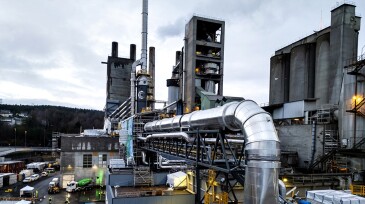
The plant at Heidelberg Materials’ cement facility in Brevik, Norway, has captured its first 1,000 metric tons of carbon dioxide.
-
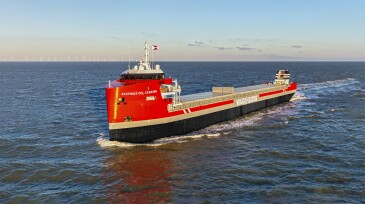
The vessel is expected to be delivered by the end of the year, while the project's new port in Esjberg is on target for completion this autumn.