Carbon capture and storage

This paper presents an approach for safe, efficient, and cost-effective legacy well reabandonment.

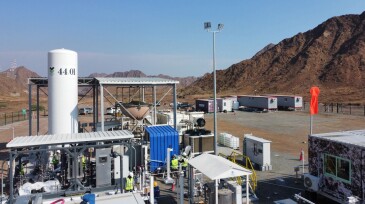
This paper presents a flexible, highly cost- and energy-efficient method of gas separation and CO₂ capture from many different gas mixtures with a large range of CO₂ concentrations.

This study explores the carbon-capture and mineralization potential of ultramafic rock powders when exposed to flue gases generated from combustion of crude oil and mesquite-derived charcoal.
-
 Aramco expects to complete Phase 1 construction of the 9-mtpa facility in 2027.
 -
As Southeast Asia’s third-largest gas producer, PTTEP is investing in its energy security by prioritizing gas production and building up a global LNG supply chain.
-
Ineos, the day-to-day operator of Greensand Future, with its partners Harbour Energy and Nordsøfonden, has made a final investment decision into the first commercial phase, with storage operations set to begin by early 2026.
-
Permits for the East Side Cluster carbon storage project have been awarded, and participants have begun announcing final investment decisions.
-
DNV has certified the feasibility of ADNOC’s West Aquifer carbon dioxide storage site in the UAE, marking a significant milestone in the Middle East’s carbon capture and storage efforts.
-
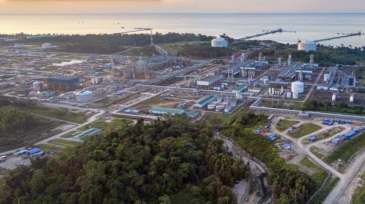
The plan calls for developing a gas field, CCUS, and onshore compression, with first production expected in 2028.
-
Wood Mackenzie analysis projects a full repeal of the Inflation Reduction Act is unlikely, while industry proponents urge permitting overhaul and loosening of burdensome regulations.
-
The partnership between GLJ and Energy Fuse Group aims to leverage the expertise of both companies in project management, operational design, and subsurface and commercial evaluations to facilitate effective CO2 storage solutions.
-
A new type of porous material called a covalent organic framework quickly sucks up carbon dioxide from ambient air.
-
With emissions mineralization established as a proven approach, the companies’ next objective is to move the underlying technology toward commercial success.