Carbon capture and storage

This SPE technical section editorial synthesizes six technical themes shaping CO2 transport and storage and interprets them through a petroleum engineering capability lens.
The Pawnee Carbon Sequestration Project, which would use a repurposed well, is planned to capture and store up to 400,000 tonnes of carbon dioxide, with first injection targeted for early 2027.

This paper details the importance of and value derived from a real-time process-twin model for one of the world’s largest operating carbon dioxide sequestration projects.
-
 The facility for open-source carbon capture, transport, and storage has been completed.
-
Stable policies and economics that encourage development are critical for scaling carbon capture.
-
By repurposing Italy’s depleted Porto Corsini Mare Ovest offshore gas field for CO2 storage, Eni and Italian grid operator Snam have positioned the Ravenna CCS project to play a major role in the EU’s development of more than 50 mpta of CO2 storage capacity by 2030.
-
Carbon storage specialist Storegga joins Petronas and ADNOC in a joint study to strategize the build-out of Malaysia’s offshore as a regional CCS hub.
-
H2Teesside is expected to be one of the UK’s largest low-carbon hydrogen production facilities, targeting 1.2 GW of low-carbon hydrogen production, which equates to more than 10% of the UK’s 2030 hydrogen production target.
-
Cost concerns temper public appetite for clean energy while companies struggle to find investors for projects.
-
Transition requires action, not perfect technology, but challenges remain around scalability, cost, and revenues.
-
The SPE CO2 Storage Resources Committee has opened a period for public comments on an update to the current 2017 SRMS.
-
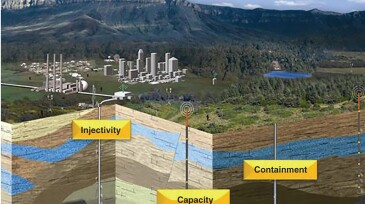
The Earth has huge capacity to store carbon dioxide emitted from energy production. This article discusses the technology of carbon capture, utilization, and storage (CCUS) and its challenges.
-
Reducing greenhouse-gas emissions with geologic carbon storage will require a new way to model rock physics.