Carbon capture and storage

This paper presents an approach for safe, efficient, and cost-effective legacy well reabandonment.

This paper presents a flexible, highly cost- and energy-efficient method of gas separation and CO₂ capture from many different gas mixtures with a large range of CO₂ concentrations.

This study explores the carbon-capture and mineralization potential of ultramafic rock powders when exposed to flue gases generated from combustion of crude oil and mesquite-derived charcoal.
-
 This article is the fifth in a Q&A series from the SPE Research and Development Technical Section focusing on emerging energy technologies. In this edition, Shantanu Agarwal, founder and CEO of Mati Carbon, discusses how the company’s approach to carbon removal led to winning the Musk Foundation’s XPRIZE in 2025.
 -
The publication highlights the role of carbon capture and storage (CCS) in the energy transition and how the oil and gas industry can support the uptake of CCS technologies and presents case studies from Ipieca members.
-
The Global CCS Institute released its Global Status of CCS 2025 report, which states that the number of operating CCS facilities has grown to 77 with a capability of storing 64 mtpa.
-
COP30 in Brazil represents a historic first, with the country being the first COP host to have a national CCUS law, an operating direct air capture plant, a project nearing CO₂ injection for pure geological storage, and more.
-
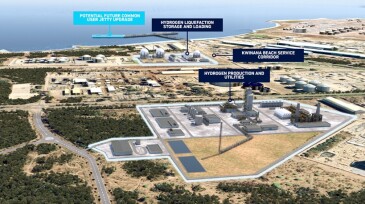
Australia’s H2Perth blue and green hybrid hydrogen project is expected to benefit from carbon credits from the offshore Bonaparte carbon storage facility where Inpex and TotalEnergies are drilling appraisal wells together with Woodside.
-
The carbon capture and storage system is expected to transport and store up to 680,000 tonnes of carbon dioxide per year in Louisiana.
-
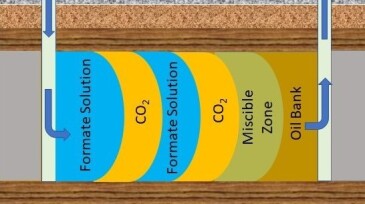
In a study that applied alternative carbon carrier technology to enhanced oil recovery (EOR) scenarios, researchers at The University of Texas at Austin found that the new method recovered up to 19.5% more oil and stored up to 17.5% more carbon than conventional EOR methods.
-
The spring Unified Agenda provides a snapshot of efforts to advance the president’s plans for fossil fuel exploration and infrastructure.
-
The initial phase of the carbon capture and storage project has a capacity of 1.5 million tonnes per year, with a second phase—due online in 2028—expected to bring the storage capacity to 5 million tonnes per year.
-
BlackRock’s Global Infrastructure Partners moves to buy nearly half of the stake in Eni's CCUS subsidiary.