Casing/cementing/zonal isolation

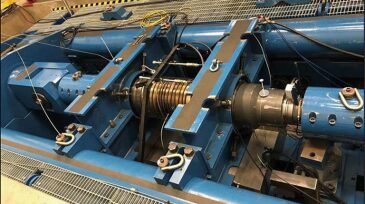
This case study outlines a full-scale testing program focused on the behavior of thermal casing connections subjected to severe bending and low-cycle fatigue loading.

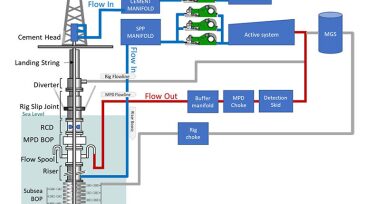
As managed pressure drilling gains traction, its principles are influencing a wider range of well-construction activities.

This paper presents a study that confirms glass-reinforced-epoxy-lined tubing as a reliable, cost-effective solution for long-term water-injection service in moderate-salinity offshore environments.
-
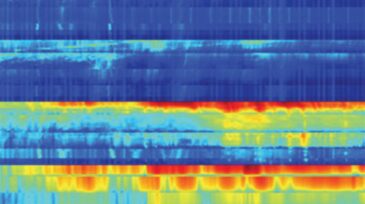
 This study used ultrasonic logging to evaluate reference barrier cells constructed with known defects. The cell concept was developed with an emphasis on low cost and ease of use.
 -
SponsoredThis article highlights a technology that helped one operator add $120,000 to its incremental gas recovery.
-
This paper describes a high-pressure/high-temperature (HP/HT) expandable liner hanger product that offers metal-to-metal and elastomer sealing capabilities at the liner top in the host casing.
-
SponsoredRunning casing to depth in long lateral sections is challenging, often costing operators a significant portion of pay zone at the toe of the well. This article highlights a technology that helped one operator add $120,000 to its incremental gas recovery.
-
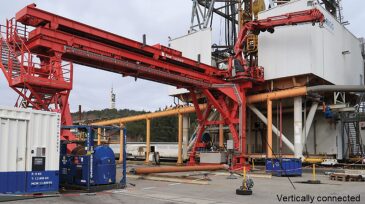
This case study discusses the methodology that underlies the successful determination of the depths and the radial locations in the outer casing strings of multiple leaks in an offshore well.
-
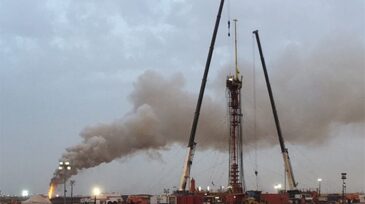
This paper describes the mobilization of a snubbing unit and blowout preventer (BOP) stack in the Middle East that enabled a well with an underground blowout and surface broaching to be brought under control within a short time.
-
Field N is a complex heavy-oil field in the north of the Sultanate of Oman. The dynamic behavior of Field N is characterized by strong aquifer and is dominated by bottomwater drive.
-
This paper presents the design considerations, methodology, and results of two deepwater MPC operations conducted to cement production casing strings within a target operating window of approximately three-tenths of a pound.
-
This paper is part of an ongoing effort to minimize the likelihood of failure using data-mining and machine-learning algorithms.
-
I am encouraged that we, as an industy, continue to refine and tweak our practices to solve zonal-isolation and cementing challenges in every well environment in which we work. As cementing techniques are improved, so, too, are the cement-evaluation methods and work flows.