Completions

Industry experts at URTeC assessed more than a decade of unconventional growth while discussing where productivity gains will come from next.

Chevron and Halliburton describe how they built and deployed the fully autonomous closed-loop fracturing system that enables subsurface-driven optimization.
Weatherford CEO Girish K. Saligram said the acquisition will bolster Weatherford’s completions offerings and unconventional reservoir capabilities.
-
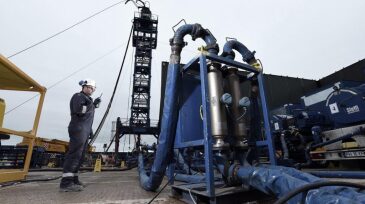
 The UK shale operator will move forward with fracturing and testing its second well at its Lancashire site despite strict constraints on induced seismicity that hampered fracturing work on its first well.
 -
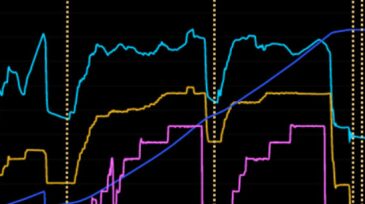
Usually, field engineers manually pick events such as start and end times out of hydraulic-fracturing pumping data. This manual process is time-consuming and prone to error. Now, a Denver-based company is using machine learning to identify these events more accurately and consistently.
-
A study by a real-time monitoring company showed that many coiled-tubing strings are retired with a lot of life left in them. It suggested companies could lower costs by using pipe for a longer time and could benefit from multicompany studies showing how their decisions compare to the competition.
-
Regulators say the blowout that killed five workers on a Patterson-UTI rig in Oklahoma was the product of a slow-moving series of missed signals, misleading testing, and miscalculations that failed to control a natural gas influx.
-
As the hydraulic fracturing market faces pressure to lower costs, Keane Group and C&J Energy Services announce they will combine their businesses.
-
The new well control rule is evidence that memories of the Macondo blowout remain a powerful force for caution. Despite the rhetoric on both sides of this hot-button issue suggesting big changes, the final changes were incremental.
-
The evolution of hydraulic fracturing is a long and circuitous one that deserves examination. Engineering and completions leaders from Liberty Oilfield Services did just that, authoring a paper that encapsulates the high points in the development of the groundbreaking completions practice.
-
This paper presents a newly developed model to predict the breakdown pressures in cased and perforated wells.
-
As gas development focuses more on tight and ultratight formations, the challenges to produce economically become diverse and more intense. One main challenge faced while fracturing a well is a high fracture gradient.
-
This paper presents a newly designed triaxial fracturing system and describes a series of experiments that verified the validity of tool-free chemical diversion for multistage fracturing of openhole horizontal wells.