Completions

Industry experts at URTeC assessed more than a decade of unconventional growth while discussing where productivity gains will come from next.

Chevron and Halliburton describe how they built and deployed the fully autonomous closed-loop fracturing system that enables subsurface-driven optimization.
Weatherford CEO Girish K. Saligram said the acquisition will bolster Weatherford’s completions offerings and unconventional reservoir capabilities.
-
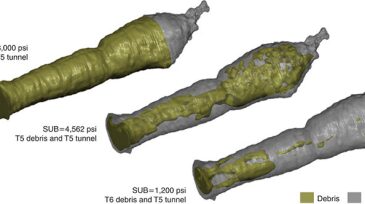
 Because of inherent complexities, understanding the characteristics of perforations in downhole environments is a significant challenge. Perforation-flow laboratories have been used to provide insight into cleanup and productivity mechanisms around perforation tunnels.
 -
This paper describes a diagnostic fracture injection test-analysis program and the suitability of the results from ACAs for use in hydraulic-fracture design.
-
Diagnostic fracture injection tests (DFITs) incur direct and indirect costs resulting from the tests themselves and the extended time required for the pressure falloff, which delays the completion of the well. The benefits, therefore, must outweigh the costs if the test is to be justified.
-
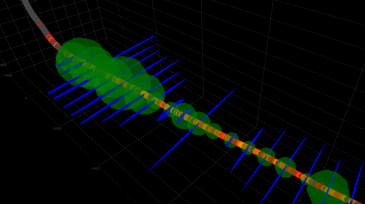
Using drilling data and a downhole acoustic signal, developers aim to assess unconventional fracture networks in real time and give engineers ability to customize each stage.
-
Completion engineers feel pressure to maximize production per acre and minimize the downsides of fracturing in tight spaces. Terry Palisch, talks about promoting knowledge sharing as part of JPT’s tech director report.
-
Water management for unconventional projects continues to evolve at a rapid pace. What are some of the universal trends industry is adopting to handle higher produced water volumes and increased demand, and how do local dynamics impact the adoption of these trends?
-
ProPetro closed its deal to purchase Pioneer’s pressure pumping fleet, boosting its services in the Permian Basin.
-
Three onshore fields in the Emirate of Sharjah, United Arab Emirates, have more than 30 years of production history from more than 50 gas-condensate wells.
-
This paper describes how a technique known as applied-surface-backpressure managed-pressure drilling (ASBP-MPD) can alleviate the limitations of conventional deepwater well control.
-
An oil and gas startup has attracted the business with a major operator thanks to its ability to forecast whether production-enhancing chemicals will work as advertised.