

Completions

This case study presents a procedure in which the operator compared production from wells with adjusted wettability to a control group, finding that the adjustments resulted in significant improvements in production and reductions in produced water.
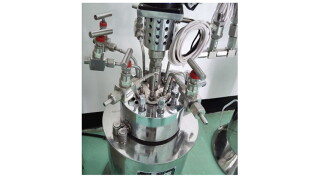
This study aims to systematically assess casing integrity and corrosion risks associated with CO2 injection in oil-recovery operations.

This paper presents findings reinforcing the argument that acid fracturing is a strong alternative stimulation method to improve productivity in the Austin Chalk formation.
-
 When it comes to hydraulic fracturing, steadiness may not be a virtue. That was the conclusion of a test to see if rapid pump rate variations would lead to greater production than conventionally fractured stages when the pressure was held steady.
 -
Achieving greater efficiency in perforation systems can help lower operating costs, particularly when completing long horizontal wellbores in unconventional plays.
-
This paper identifies current development paradigms and discusses the future challenges in well planning, product development, and regulation.
-
A new proppant exhibits a neutrally wet surface, which does not have a preferential affinity for oil, gas, or water and therefore will not promote the preferential entrapment of any phase within the proppant pack.
-
Hydraulic fracturing exerts transient geomechanical forces near the wellbore, enabling a brief time interval in which a second hydraulic fracture can be created in a different direction.
-
The oil-economy downturn will not affect the areas where research, development, and application of novel technologies are absolutely necessary for the commercialization of hydrocarbon.
-
While many factors may influence fracture-height evolution in multilayer formations, the consensus is that the so-called “equilibrium height belonging to a certain treating pressure” provides an upper limit, at least for nonnaturally fractured media.
-
A new unconventional proppant technology—a rod-shaped proppant—delivered 25% higher oil per net pay compared with offset wells using conventional proppant.
-
A refracturing campaign in the Permian yielded a production gain that allowed payback on the investment within 6–12 months.
-
The integration of microseismic data with 3D seismic attributes, and well log and completions data is used to understand geomechanical rock properties.


