Completions

Three papers are highlighted as the primary contributions because of their broad industry relevance. They focus on improving formation particle-size characterization, expanding the application of openhole gravel packs in depleted and compartmentalized reservoirs, and advancing the understanding of capillary pressure in sand production.

This paper aims to establish a set of best practices for generating particle-size-distribution data from core samples.

This paper discusses the successful execution of two openhole gravel-pack completions in two Gulf of Mexico fields with depleted reservoirs.
-
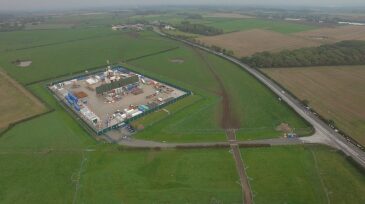
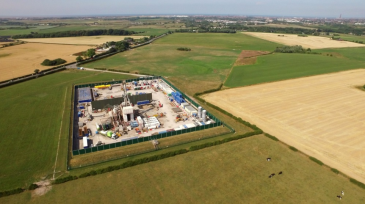
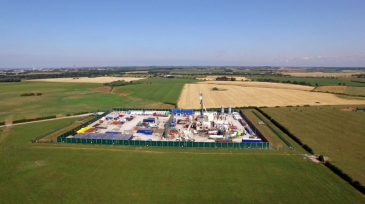
 Small quantities of gas and water are flowing to the surface from the UK’s first horizontal shale well—just days after operator Cuadrilla paused injection work for a second time amid earthquakes.
 -
BHGE is developing an analytics and machine-learning approach that offers descriptive and predictive insights on frac hits, with the aim of eventually offering a real-time monitoring capability to be deployed during frac jobs.
-
The SPE Liquids-Rich Basin Conference in Midland, Texas, merged topics that have dominated recent industry discussions: technologies centered on big data, interwell communication, and Permian Basin production.
-
Cuadrilla has encountered its first bumps in the road while fracturing its Preston New Road shale gas well, with two quakes already temporarily halting injection operations.
-
When it came to decide where to collect a critical sample of fractured rock, a new method for turning microseismic data into a heat map designed to display the most intense fracturing activity was considered.
-
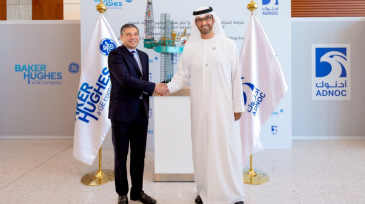
The union marks the first time an international company has taken a direct equity stake in one of ADNOC’s service companies. BHGE will expand its presence in UAE, while ADNOC will gain access to BHGE technological expertise and proprietary equipment.
-
Cuadrilla Resources will test the two wells over the next 6 months to determine how much gas it can initially recover from the Bowland Shale.
-
This paper proposes a new work flow to simulate water-hammer events, the resulting wellbore failure, and sand production in water injectors.
-
This paper presents the first successful application of ceramic sand screens offshore Malaysia. Ceramic sand screens were considered as a remedial sand-control method because of their superior durability and resistance compared with metallic sand screens.
-
In this paper, a new type of sand-consolidation low-viscous binding material, based on a combination of inorganic and organic components, is presented.