Completions

Three papers are highlighted as the primary contributions because of their broad industry relevance. They focus on improving formation particle-size characterization, expanding the application of openhole gravel packs in depleted and compartmentalized reservoirs, and advancing the understanding of capillary pressure in sand production.

This paper aims to establish a set of best practices for generating particle-size-distribution data from core samples.

This paper discusses the successful execution of two openhole gravel-pack completions in two Gulf of Mexico fields with depleted reservoirs.
-
 A software program has evolved from predicting future well output to showing engineers the many ways their ideas could affect asset performance.
 -
The rise of cube developments in the Permian Basin has introduced a new way of thinking for some of the region’s biggest players.
-
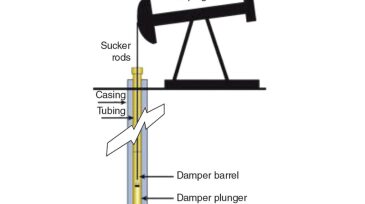
Seismic stimulation, achievable with the implementation of a single tool, requires significantly lower investments than gas, thermal, and chemical injection methods, with minimal environmental impact.
-
As operators seek lower water management costs, a pair of studies examines methods and technologies that could have a major impact on treatment and reuse for hydraulic fracturing operations and beyond.
-
Researchers at Texas Tech University have released a study into wastewater production and disposal in the Marcellus Shale, proposing disposal hubs across the state of Pennsylvania that could reduce trucking distances.
-
To better protect workers exposed to respirable crystalline silica, OSHA has issued two new standards: one for construction and another for general industry and maritime. OSHA will begin enforcing most provisions of the standard for general industry and maritime on 23 June.
-
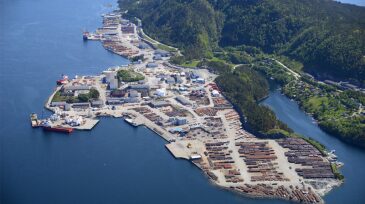
The $10 million/year contract covers the inspection and mobilization of casing and tubing at two Norwegian sites and includes extenstion options in 2020 and 2022.
-
If the papers presented at the SPE/ICoTA Coiled Tubing and Well Intervention Conference and Exhibition this March are anything to judge by, then coiled-tubing drilling seems to be regaining some interest in the broader market.
-
The evolution of horizontal drilling and multistage completions has changed matrix stimulation from the “more acid, better result” belief to effective lateral distribution and deeper penetration with less acid.
-
When a new horizontal well in Asia was incapable of unassisted flow, coiled tubing (CT) was selected for the perforation and stimulation intervention. Mechanical isolation was required to ensure that the stimulation fluids entered only the new zones.