Completions

This paper aims to establish a set of best practices for generating particle-size-distribution data from core samples.

This paper discusses the successful execution of two openhole gravel-pack completions in two Gulf of Mexico fields with depleted reservoirs.

This edition highlights three offshore technology papers that address a common industry theme: how targeted engineering solutions can reduce uncertainty, shorten operations, and make technically constrained offshore well activities more executable.
-
 One of the more important aspects of well integrity during drilling operations is early kick detection. Recently, new technologies and re-search have been applied or developed to improve the kick-detection systems and to overcome some of the difficulties.
 -
A study using a dynamic multiphase-flow software simulated a rapid-unloading event and determined the gas fraction in the riser annulus and the effect on riser fluid levels.
-
An influx-detection-at-pumps-stop (IDAPS) software was developed to provide early warning of abnormal flowback conditions during connections.
-
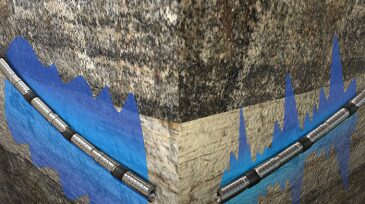
This paper presents a new technology and methods that can detect leak locations in a well and illustrate the flow profile of the leak.
-
The successes and challenges of producers in the United States’ most active oil play received a wide-ranging discussion by three panelists recently at an SPE Gulf Coast Section meeting in Houston on the state of the Permian Basin.
-
One of the oldest names in geomechanical modeling has learned some new tricks, and like so many recent advances in the oil and gas industry, it has everything to do with the North American shale revolution.
-
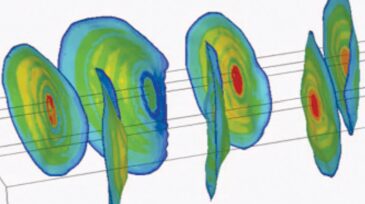
A new diagnostic technology that exclusively uses surface pressure data to map hydraulic fracturing in unconventional reservoirs has helped an operator to improve well completion designs in its Oklahoma field activities.
-
The US EPA’s 2016 New Source Performance Standards updated the 2012 standards by adding requirements for the industry to reduce greenhouse gas emissions, specifically methane. The 2016 NSPS also covers hydraulically fractured oil wells and production, processing, transmission and storage activities.
-
Geophysicists from Stanford University have compiled a map of new maximum horizontal stress orientations in Texas and surrounding areas, potentially giving operators new information for avoiding seismic activity in their hydraulic fracturing operations.
-
The Wyoming Department of Environmental Quality recently concluded that hydraulic fracturing operations were not the likely cause of well water contamination in a small town.