Data & Analytics

Working with Dell Technologies and NVIDIA, the French supermajor is targeting improved seismic processing and artificial intelligence applications.

A discussion at the inaugural executive breakfast convened by the SPE Data Science and Engineering Analytics Technical Section, held alongside CERAWeek by S&P Global and powered by Black & Veatch, tackled the challenge of value creation from artificial intelligence in the energy industry.

AI‑driven data center growth is straining US power grids and accelerating interest in enhanced geothermal systems as a scalable, low‑carbon solution.
-
 The partnership opportunity is designed to spur the development of next-generation tools and technologies that will become widely adopted throughout the energy sector to reduce the risk that a cyber incident could disrupt the country’s energy system.
 -
Data science and decision science are related but still separate fields, so, at some points, it might be hard to compare them directly. This article attempts to show the commonalities, differences, and specific features of data science and decision science.
-
The technologies born out of innovative ideas have been critical for advancing deepwater assets in the past, and venture-capital investment helps incubate risk-taking companies developing those technologies. With digitization becoming a greater focus in industry, what role will venture capital play?
-
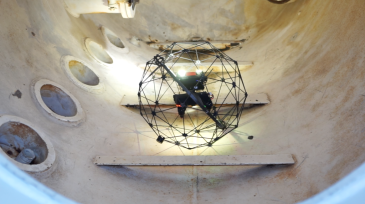
Advances in robotics can revolutionize the way maintenance, inspection, and testing is performed, making operations safer by reducing exposure of personnel to hazards. This paper analyzes the causes of slow industry adoption of robotic technologies and presents a roadmap for accelerated adoption.
-
Maybe we don’t need to look inside the black box after all. Maybe we just need to watch how machines behave, instead.
-
Robots may not be ready to take over the world just yet, but they are making great strides in the offshore industry. A technical session at this year’s Offshore Technology Conference presented some of the advances, including untethered ROVs and subsea broadband communications.
-
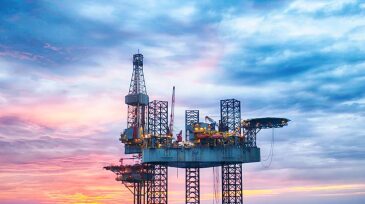
Adoption of digital technologies will continue to improve the offshore sector, including improved well efficiency, real-time directional drilling, lower maintenance costs, and safer operations.
-
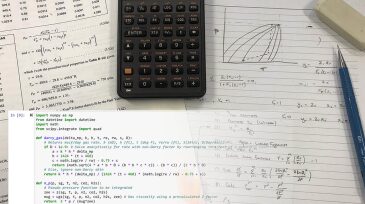
As the oil and gas industry moves more into the machine learning space, Python-conversant petroleum domain specialists will prove to be increasingly valuable to organizations.
-
The authors of this paper propose a novel work flow for the problem of building intelligent data analytics in heavy-oil fields.
-
This paper discusses how machine learning by use of multiple linear regression and a neural network was used to optimize completions and well designs in the Duvernay shale.