Data & Analytics

Aramco says it has saved $770 million over the past 3 years from the $70 million it has invested over the same period in corrosion management technologies.

The deal adds physics-based reservoir modeling and real-time decision workflows to SLB’s digital portfolio.

The paper presents the design and successful field deployment of the first closed-loop hydraulic fracturing program.
-
 Five years ago, an attack on nearly two dozen US natural gas utilities set off alarm bells in the US intelligence community. Many gas companies say they have shored up security since then. But the sector’s overall cyber readiness is a black box even to those charged with overseeing it.
 -
Leveraging data to drive the best technology solutions and inform business strategy is the route to future industry success, says a US independent’s top executive.
-
In recent months, more US oil company boards have demanded information technology managers prove refineries and drilling rigs are protected against cyberattacks, the chief of a security firm says.
-
Behind the use of most drones and unmanned aerial vehicles is the issue of safely and legally operating beyond the visual line of sight (BVLOS). Jim Cieplak talks about his work with Harris Corporation and BVLOS solutions.
-
Panelists at the Offshore Technology Conference largely doubted that the oil and gas industry is making full use of digital technology for fundamental transformation.
-
A cybersecurity director outlines the steps needed to adopt a risk-based cybersecurity program. He cautions that in many cases, process control systems’ confidentiality is mistakenly viewed as a lower priority than IT systems’.
-
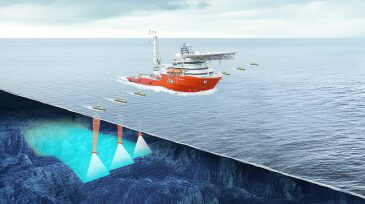
AUVs aren’t limited to inspections and pipeline surveys. Deployment of a flotilla of AUVs to work on a project, and the communication among them, may someday lead to a subsea Internet of Things.
-
An industry expert said that workforce education will be critical to helping companies adapt to a changing data landscape and optimize their operations.
-
This paper reviews clusters of information that will be termed “building blocks” for deepwater-field-development planning, discussing how they are currently used and exploring more-affordable, but technically robust, alternatives.
-
With the availability of more-complex smart-well instrumentation, immediate evaluation of the well response is possible as changes in the reservoir or well occur.