Data & Analytics

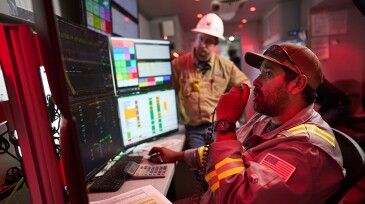
This case study describes how edge computing and industrial internet of things platforms were deployed to automate and optimize production operations across four distinct basins.

This work describes a study in which distributed data parallel training, paired with a node-local caching pipeline, enabled efficient multigraphics-processing-unit scaling for a CO₂-storage graph-neural-network surrogate while maintaining generalization.

This work uses a novel pseudosteady-state-based simulation to reduce training-data-generation cost while maintaining high-performance predictions of data-driven proxy models for carbon-sequestration projects.
-
 This paper reviews the motivation and development of response-based forecasting from the perspective of the authors, reviewing examples and processes that have served as validation and led to modeling refinement.
 -
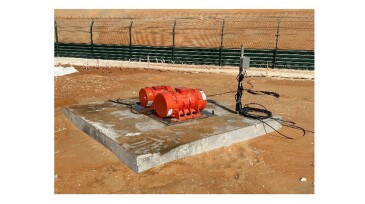
The paper describes the deployment of fiber-optic monitoring of CO₂ injection and containment in a carbonate saline aquifer onshore Abu Dhabi.
-
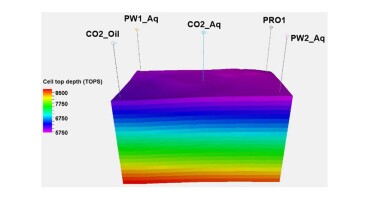
This paper presents a novel workflow with multiobjective optimization techniques to assess the integration of pressure-management methodologies for permanent geological carbon dioxide storage in saline aquifers.
-
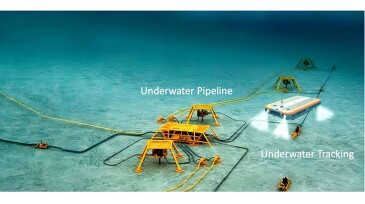
This paper introduces a technology for offshore pipeline inspection centered on an autonomous robotic system equipped with underwater computer vision and edge-computing capabilities.
-
Intelligent completions could improve many of the world’s oil and gas wells, but not all are suited to the technology. There is another option.
-
Oil and gas experts encourage human/AI partnerships that can “supercharge” capabilities to create competitive advantages.
-
Deploying artificial intelligence across an enterprise requires thinking beyond the pilot.
-
SponsoredKongsberg Digital’s mobile companion to the SiteCom platform is designed to keep wellsite insight close at hand, wherever the job takes you.
-
The fifth edition of the SPE Europe Energy GeoHackathon, beginning on 1 October, focuses on how data science can advance geothermal energy and drive the energy transition.
-
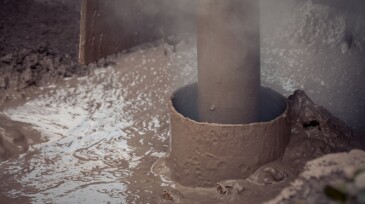
This paper presents the development of a robust, physics-based, and data-driven workflow for modeling mud loss in fractured formations and predicting terminal mud loss volume and time, as well as equivalent hydraulic fracture aperture.

![JPT_2025-09_GuestEd1_SS_382853197[4].jpg](https://assets.spe.org/dims4/default/860913d/2147483647/strip/true/crop/850x475+0+46/resize/365x204!/quality/90/?url=http%3A%2F%2Fspe-brightspot.s3.us-east-2.amazonaws.com%2F8a%2F95%2Fe4e82cb54fd597d497a5b1267f8a%2Fjpt-2025-09-guested1-ss-3828531974.jpg)