Data & Analytics

Schneider Electric says the deal advances its vision of creating intelligent industrial ecosystems that connect physical assets with digital insights across the asset life cycle.
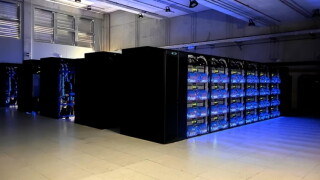
With the latest addition, the Italian major’s computational capacity passes the exaflop threshold, making the firm the world’s leading company by computing power in the new TOP500 global ranking.

This case study describes how edge computing and industrial internet of things platforms were deployed to automate and optimize production operations across four distinct basins.
-
 What do 60,000 sensors on 1,200 pieces of equipment add up to? Hopefully, hundreds of millions of dollars in savings.
 -
In this paper, the authors propose a coupled wellbore/reservoir model that performs dynamic nodal analysis using integrated models for surface-facilities, wellbore, and reservoir simulators and allows an operator to select choke sizes as a function of time.
-
From the highest courts of the US judicial branch to the C-suite, contests involving patents have recently come to the fore in the innovation hungry US oilfield services industry, even as filings and litigation have declined in recent years.
-
Having blockchain on an oil rig means everyone on the job shares a view of a project from start to finish. This could facilitate innovations that cut costs, but organizational change is required.
-
The objective of this paper is to illustrate a methodology for identifying the value of information (VOI) in reservoir management—in particular, for deriving the conditional probabilities of success when new and imperfect data are acquired.
-
Initial development of inflow tracers was designed to provide qualitative information about the location of water breakthrough in production wells. The proof of concept and application for water detection initiated the development of oil tracers for oil-inflow monitoring.
-
The technology will provide Equinor a continual feed of updated reservoir information from its Johan Castberg and Johan Sverdrup fields with the aim of improving well placement, production, injection, and—ultimately—recovery.
-
DNV GL has published a paper to support the safe use of artificial intelligence. The paper asserts that data-driven models alone may not be sufficient to ensure safety and calls for a combination of data and causal models to mitigate risk.
-
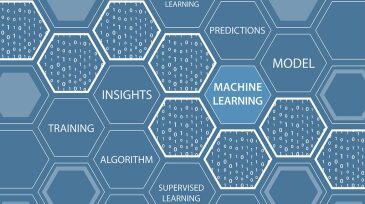
Machine learning and artificial intelligence technology offer offshore operators the chance to automate high-cost, error-prone tasks to avoid the effects of inconsistency and errors in analysis, improving efficiencies and safety.
-
Video games have been seen as a big waste of time for years by parents around the globe. But now, the oil and gas industry sees the underlying technology as a big time saver.