Data & Analytics

Canada’s development of large-scale digital drilling core libraries and open geoscience data platforms follows approaches pioneered in Australia, particularly Western Australia, through decades of government investment in geoscience data collection and preservation.

This research focuses on combining physics-based expert rules with machine learning to improve the detection of failure-related events in electrical submersible pumps.

A combination of physics principles and machine-learning techniques is used in this work to develop a virtual flowmeter for oil-production optimization in electrical-submersible-pump-lifted oil wells, resulting in reliable generalization.
-
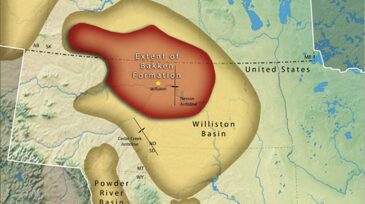
 Multistage horizontal well designs were first implemented in the Bakken in 2007. Since then, more than 12,000 wells have been completed in either the Middle Bakken or Three Forks zones.
 -
Rather than waiting for a dominant player to emerge, the oil and gas industry is at a point in its journey with blockchain where it makes sense to actively start working toward common architectures and standards in the blockchain domain.
-
Data undoubtedly has value, agreed participants at a recent symposium held by the Professional Petroleum Data Management Association in Denver. Quantifying that value—and communicating that value to decision-makers in a company—however, is tricky if not impossible.
-
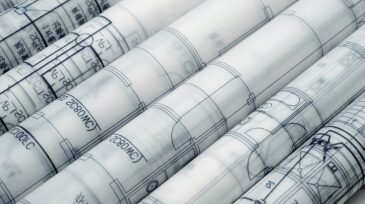
Using deep-learning and computer-vision techniques, the software recognizes all instances of specific instruments, valves, lines, and other features in a P&I diagram in seconds.
-
The joint offerings are expected to help make energy operations safer, cleaner, and more efficient.
-
The vigilante hacker has offered the reward for hacktivists and criminals who break into capitalist institutions.
-
The digital transformation is a risky proposition for oil and gas companies adapting to a rapidly changing business environment, but a failure to adapt could spell trouble for the industry.
-
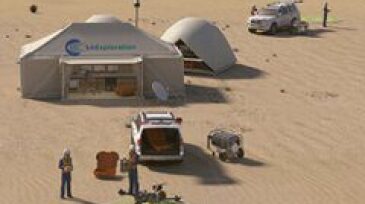
The seismic sensors will be dropped by six autonomous aerial drones and later be retrieved by an unmanned ground vehicle instead of conventional manual deployment and recovery by ground-based teams.
-
The scientific literature is riddled with bad charts and graphs, leading to misunderstanding and worse. Avoiding design missteps can improve understanding of research.
-
Equating data to oil might make sense at first glance, given the data-driven success of tech companies, but the analogy breaks down as soon as you dig a little deeper.