Data & Analytics

A combination of physics principles and machine-learning techniques is used in this work to develop a virtual flowmeter for oil-production optimization in electrical-submersible-pump-lifted oil wells, resulting in reliable generalization.

After years of market shocks, technological breakthroughs, and rising uncertainty, ATCE 2026 will provide new insights on how industry leaders and technical experts are preparing for the next era of the upstream business.

This research focuses on combining physics-based expert rules with machine learning to improve the detection of failure-related events in electrical submersible pumps.
-
 The technologies born out of innovative ideas have been critical for advancing deepwater assets in the past, and venture-capital investment helps incubate risk-taking companies developing those technologies. With digitization becoming a greater focus in industry, what role will venture capital play?
 -
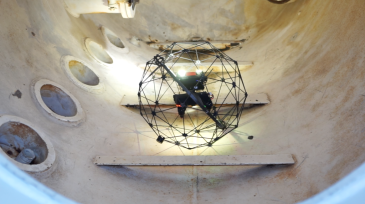
Advances in robotics can revolutionize the way maintenance, inspection, and testing is performed, making operations safer by reducing exposure of personnel to hazards. This paper analyzes the causes of slow industry adoption of robotic technologies and presents a roadmap for accelerated adoption.
-
Maybe we don’t need to look inside the black box after all. Maybe we just need to watch how machines behave, instead.
-
Robots may not be ready to take over the world just yet, but they are making great strides in the offshore industry. A technical session at this year’s Offshore Technology Conference presented some of the advances, including untethered ROVs and subsea broadband communications.
-
Adoption of digital technologies will continue to improve the offshore sector, including improved well efficiency, real-time directional drilling, lower maintenance costs, and safer operations.
-
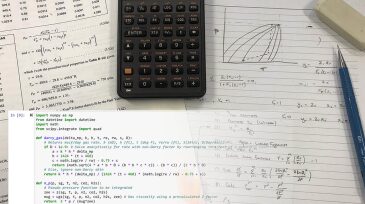
As the oil and gas industry moves more into the machine learning space, Python-conversant petroleum domain specialists will prove to be increasingly valuable to organizations.
-
The authors of this paper propose a novel work flow for the problem of building intelligent data analytics in heavy-oil fields.
-
This paper discusses how machine learning by use of multiple linear regression and a neural network was used to optimize completions and well designs in the Duvernay shale.
-
This paper presents an analytics solution for identifying rod-pump failure capable of automated dynacard recognition at the wellhead that uses an ensemble of ML models.
-
As you read the examples in this section, you will see that a change is already under way in that the methods that are being used are increasingly not oil-and-gas-specific but instead follow patterns that are being used in other industries.