Data & Analytics

Canada’s development of large-scale digital drilling core libraries and open geoscience data platforms follows approaches pioneered in Australia, particularly Western Australia, through decades of government investment in geoscience data collection and preservation.

This research focuses on combining physics-based expert rules with machine learning to improve the detection of failure-related events in electrical submersible pumps.

A combination of physics principles and machine-learning techniques is used in this work to develop a virtual flowmeter for oil-production optimization in electrical-submersible-pump-lifted oil wells, resulting in reliable generalization.
-
 Data mining for production optimization in unconventional reservoirs brings together data from multiple sources with varying levels of aggregation, detail, and quality.
 -
The big data approach will allow new types of data-driven models to bypass traditional bottlenecks. It is also expected to lead to different views of standard models, thus providing new and valuable insights in the process.
-
Permanent downhole gauges (PDGs) provide vast amounts of pressure-transient and rate data which may be interpreted with improved pressure-transient-analysis (PTA) approaches to gain more knowledge about reservoir dynamics.
-
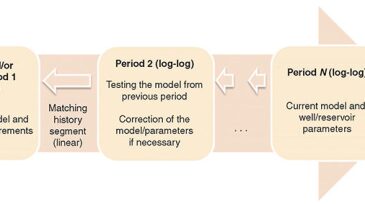
This paper proposes a framework based on proxies and rejection sampling (filtering) to perform multiple history-matching runs with a manageable number of reservoir simulations.
-
The challenges facing the oil and gas industry require crossover technologies from other industries such as aerospace, automotive, and medicine to help drive efficiency, boost productivity, and optimize performance.
-
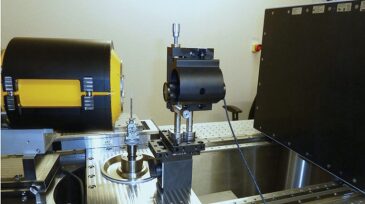
This paper describes the development of “digital-rocks” technology, in which high-resolution 3D image data are used in conjunction with advanced modeling and simulation methods to measure petrophysical rock properties.
-
Imagine a machine that could make an automaker competitive by speeding product development, help a jet engine maker create unique parts for more efficient turbines, and allow a baker to quickly create a picture-perfect 3D replica of a flower made of sugar.
-
There is a lot of information buried in drilling reports written every day, but little of it appears in computer databases.
-
A new intelligent model that successfully learns from high-dimensional data and effectively identifies high-production areas and optimum lateral-re-entry candidates is presented.
-
For thin-oil-rim reservoirs, well placement, type and path, and well-completion methods, should be evaluated with close integration of key reservoir- and production-engineering considerations.