Data & Analytics

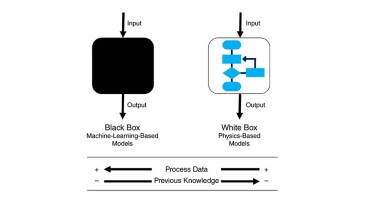
This research focuses on combining physics-based expert rules with machine learning to improve the detection of failure-related events in electrical submersible pumps.

A combination of physics principles and machine-learning techniques is used in this work to develop a virtual flowmeter for oil-production optimization in electrical-submersible-pump-lifted oil wells, resulting in reliable generalization.

This paper presents the deployment of an artificial intelligence-enabled autonomous gas lift optimization system, integrating real-time centralized advanced process control with cloud-based analytics to enhance artificial gas lift performance in producer wells.
-
 The massive system brings advanced capabilities for simulation, AI, and data analysis to drive breakthroughs in cancer research, materials discovery, energy technologies, and many other fields.
 -
B3 Insight and Nanometrics plan to integrate data from seismic monitoring with a water and subsurface data analytics platform.
-
The new burner, created with the help of machine learning and additive manufacturing, promises high methane destruction efficiency and combustion stability even in windy conditions.
-
Guest Editorial: 2025 Perspective: Digital Transformation in Oil and Gas—From Evolution to ShockwaveThe path forward is not just about automation—it is about augmentation. AI is not replacing human expertise; it is amplifying it. Those who master this balance will define the future of oil and gas in a rapidly evolving energy landscape.
-
In the Marcellus, Repsol is slicing and dicing legacy data to evolve its completions strategy, while in the Permian, ExxonMobil is mastering the 4-mile lateral drillout using lessons learned.
-
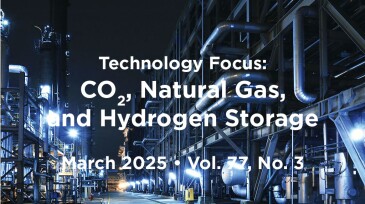
Transitioning to a low-carbon economy demands large-scale CO2, natural gas, and hydrogen storage. In this context, the application of AI/ML technology to uncover geochemical, microbial, geomechanical, and hydraulic mechanisms related to storage and solve complicated history-matching and optimization problems, thereby enhancing storage efficiency, has been prominently …
-
The authors propose a hybrid virtual flow and pressure metering algorithm that merges physics-based and machine-learning models for enhanced data collection.
-
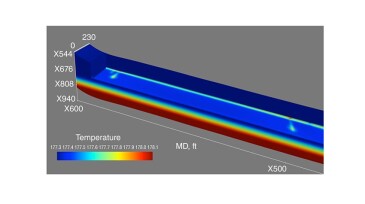
This paper discusses the concept, applications, and continual evolution of a new 3D temperature and spectral-acoustics modeling and logging approach.
-
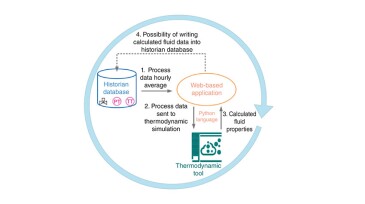
This paper presents various functionalities and benefits of a monitoring tool developed for and used with all critical flowmeters in the operator’s production system.
-
The service giant shares new details about its automated fracturing spreads that slash human operator workload by 88%.