Data & Analytics

This research focuses on combining physics-based expert rules with machine learning to improve the detection of failure-related events in electrical submersible pumps.

A combination of physics principles and machine-learning techniques is used in this work to develop a virtual flowmeter for oil-production optimization in electrical-submersible-pump-lifted oil wells, resulting in reliable generalization.

This paper presents the deployment of an artificial intelligence-enabled autonomous gas lift optimization system, integrating real-time centralized advanced process control with cloud-based analytics to enhance artificial gas lift performance in producer wells.
-
 The companies are combining their technologies in an effort to help upstream oil and gas operators monitor, report, and reduce emissions.
 -
The world's largest oil and gas company has selected French firm Pasqal to provide it with a 200-qubit quantum computer.
-
With the growing reliability of uncrewed aircraft, oil companies are now eager to have offshore rigs supplied in a more systematic and autonomous way. So, why haven’t we heard more about using uncrewed craft?
-
The Saudi Arabian major is finding new ways of using drones to help improve the safety, efficiency, and environmental performance of its operations.
-
A report from GlobalData shows how digital twins—digital representations of physical assets, systems, people, or processes—are increasingly helping oil and gas companies throughout the life cycle of their operations.
-
The partnership aims to use artificial intelligence and advanced robotics to accelerate the adoption of technologies for predictive maintenance.
-
SponsoredThe oil and gas industry makes up 40% of all anthropogenic methane emissions because of leaks at the wellsite. Fortunately, the well pad is often where methane emissions are easiest to address through a mitigation strategy of optimized maintenance and process control—all enabled by instrumentation insight.
-
Heightened focus on methane emissions management spurs a new conceptual framework to aid in determining the duration of detected methane emissions, data that may be useful to stakeholders responsible for measurement-informed emission protocols.
-
The new AIQ ownership structure will see Presight acquire 51% shareholding, with ADNOC retaining 49% and receiving a 4% stake in Presight. AIQ will continue to operate as a standalone company.
-
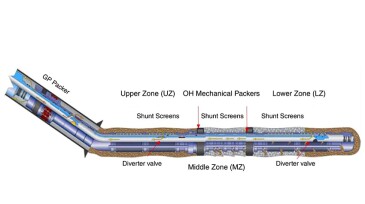
This paper presents the completion strategy implemented in an intelligent well completed in Malaysian deepwater Block K.