Data & Analytics

Canada’s development of large-scale digital drilling core libraries and open geoscience data platforms follows approaches pioneered in Australia, particularly Western Australia, through decades of government investment in geoscience data collection and preservation.

This research focuses on combining physics-based expert rules with machine learning to improve the detection of failure-related events in electrical submersible pumps.

A combination of physics principles and machine-learning techniques is used in this work to develop a virtual flowmeter for oil-production optimization in electrical-submersible-pump-lifted oil wells, resulting in reliable generalization.
-
 This study shows that dimensionless numbers, together with data-mining techniques, can predict field behavior in terms of recovery factor for sparse data sets.
 -
Making money on drilling innovation requires finding a technology that solves a significant problem, executing a good plan, and getting out while still ahead.
-
To reduce the risk of wells getting “frac hits,” Permian Basin operators around Midland created an information exchange to give them notice of nearby fracturing.
-
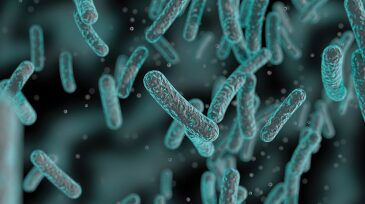
Tiny soil samples may contain as many as 300,000 species of microbial life, but a Netherlands-based startup has figured out that between 50 and 200 of them can tell an operator if a drilling location will hold oil and gas reserves.
-
Supervisory control and data acquisition systems no longer simply monitor operations and produce large volumes of data in static displays, but now collect production data from all operation data sources and contextualize and present them to workers in real time as meaningful, actionable information.
-
Public clouds are one of the emerging technologies that are minimizing the cost of processing the big data of the oil and gas industry. Among the hurdles to the wide-scale adoption of the cloud are security and access cost.
-
No longer considered a buzz phrase, cloud computing has made converts of the largest oil companies, and now the smaller ones are next.
-
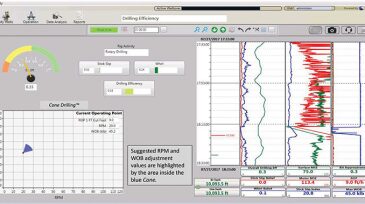
Researchers have developed a drilling-data-aggregation and -distribution system that seamlessly integrates all forms of data, file types, and communication protocols and incorporates human-factors engineering in the design.
-
As companies begin examining facilities in the wake of Hurricane Harvey, commercial drones have become a valuable asset in reaching flooded areas too dangerous for people to reach.
-
Southwest Research Institute is working to improve the accuracy of pipeline leak detection using sensors, artificial intelligence, and deep learning.