Data & Analytics

Sponsored
With operators under pressure to deliver more energy with fewer resources, predictable drilling performance is more important than ever. Discover how a unified digital workflow can turn drilling data into better decisions and consistent execution—providing the foundation for autonomous drilling and more predictable, profitable, and productive wells at scale.
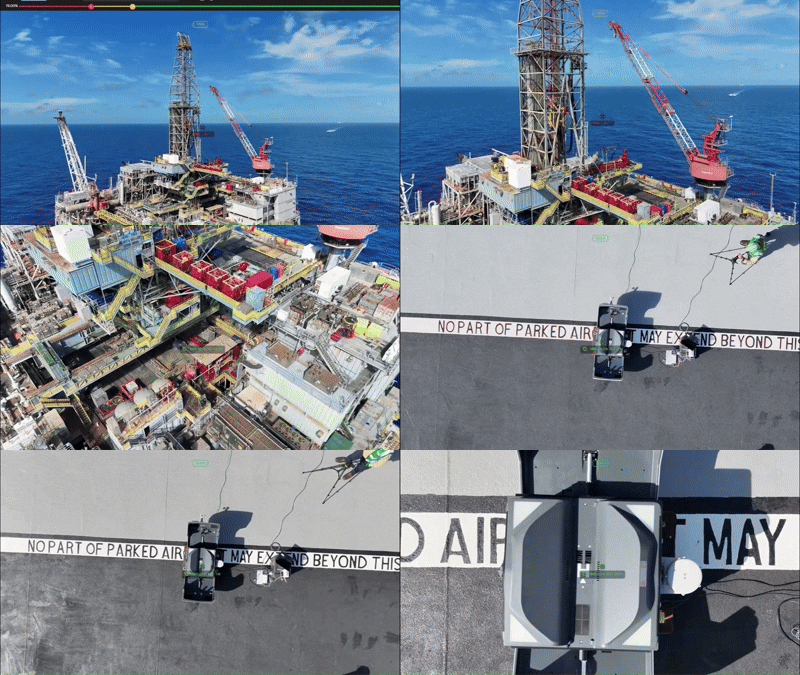
Shell has demonstrated drone-in-a-box operations from its Mars floating production unit, becoming the first operator in the region to secure FAA approval for self-approved offshore beyond-visual-line-of-sight flights. JPT Senior Technology Editor Jennifer Pallanich visited Shell Technology Center Houston to see the system in action.

Panelists at the SPE Subsea Well Intervention Symposium discussed where AI is delivering value today, where risks remain, and how engineers can best determine its usefulness.
-
 Accuracy, complexity, costs, and skills availability may make it difficult to get the most out of digital twins and even potentially misrepresent or miss actual changes in the status of systems or facilities.
 -
The new contract extends a decadelong relationship and expands the use of AI and digital twins.
-
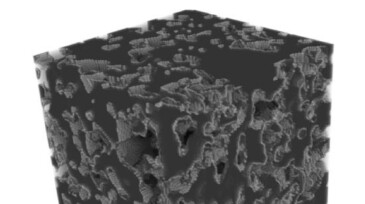
This paper presents a novel modeling framework for predicting residual oil saturation in carbonate rocks. The proposed framework uses supervised machine learning models trained on data generated by pore-scale simulations and aims to supplement conventional coreflooding tests or serve as a tool for rapid residual oil saturation evaluation of a reservoir.
-
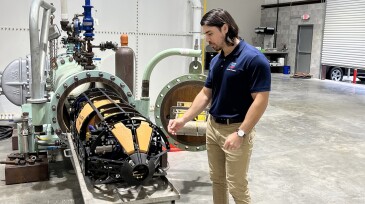
The main objective of this paper is to provide a solution that eliminates the risks of working in confined spaces and aids in preventive maintenance.
-
SPE is excited to livestream these thought-provoking and informative Tech Talks from the SPE Energy Stream studio at the SPE Annual Technology Conference and Exhibition, 23–25 September, in New Orleans.
-
The traditional method of inspecting tanks puts workers in danger. Using robots instead can keep workers out of harm’s way.
-
Surveillance technologies have undergone a revolution, reshaping how facilities, wells, and reservoirs are monitored. These advancements not only have increased the scale at which these technologies are deployed but also have led to an unprecedented influx of data. The sheer volume of data, however, poses a significant challenge to traditional analytical methods.
-
One hydraulic fracturing job can stimulate two wells, but economic success hinges on doing it in the right place for the right price.
-
You’ve heard of generative artificial intelligence, and odds are you’ve used it. But do you know how it works?
-
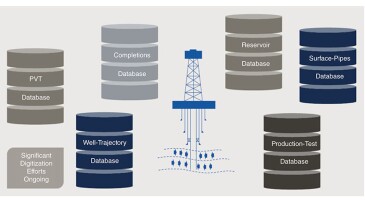
This paper describes the development of a comprehensive digital solution for well surveillance and field-production optimization for an offshore field consisting of four stacked reservoirs, each containing near-critical fluids.