Data & Analytics

Sponsored
With operators under pressure to deliver more energy with fewer resources, predictable drilling performance is more important than ever. Discover how a unified digital workflow can turn drilling data into better decisions and consistent execution—providing the foundation for autonomous drilling and more predictable, profitable, and productive wells at scale.
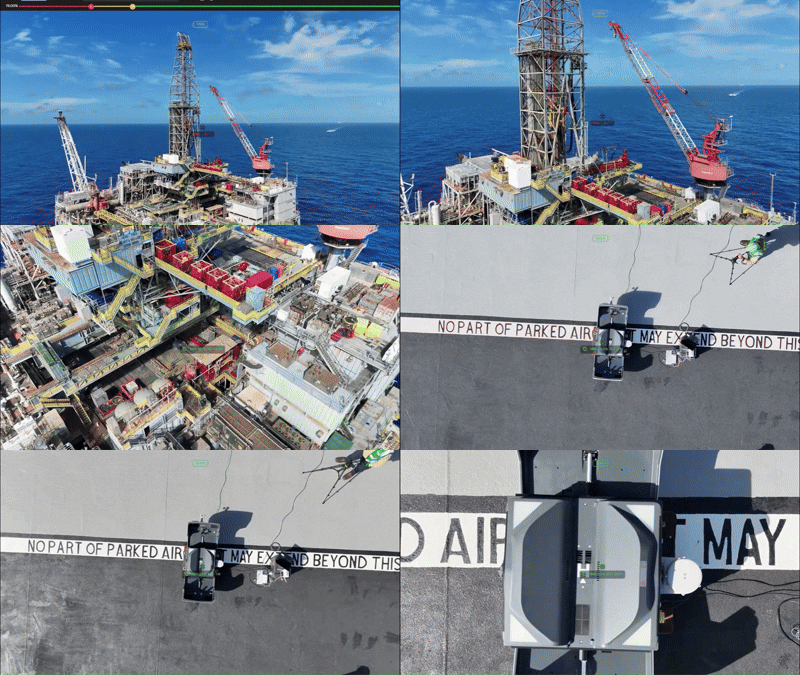
Shell has demonstrated drone-in-a-box operations from its Mars floating production unit, becoming the first operator in the region to secure FAA approval for self-approved offshore beyond-visual-line-of-sight flights. JPT Senior Technology Editor Jennifer Pallanich visited Shell Technology Center Houston to see the system in action.

Panelists at the SPE Subsea Well Intervention Symposium discussed where AI is delivering value today, where risks remain, and how engineers can best determine its usefulness.
-
 EQT is benchmarking its way to basin-leading productivity and relying on partnerships and new technology to turn KPIs into operational reality.
 -
In this paper, a case study is described in which a software solution enabled prescriptive optimization of well delivery using a physics-informed machine-learning approach for predictive identification and characterization of well-construction risks.
-
Drilling experts recently shared candid views on what will be required for their segment of the upstream business to move to the next stage of development.
-
This month’s column highlights how artificial intelligence is influencing SPE programming, publications, and new tools, while also transforming day‑to‑day operations across our industry. The column explores energy supply implications and practical field applications, showing how SPE is helping members turn AI into a tool for progress.
-
The companies also agreed to collaborate on new AI models to unlock further insights from S&P Global Energy’s upstream data.
-
As AI drives record heat loads in data centers, immersion liquid cooling is gaining momentum, and energy companies are lining up to support it.
-
Artificial intelligence is prompting oil and gas companies to redefine roles, rethink trust, and rework operations, experts said during CERAWeek.
-
The gap between machine learning research and effective deployment in the oil and gas industry is an alignment challenge between research questions and real decisions, between model design and operational constraints, and between innovation and the people expected to use it.
-
Technology and partnerships remain important, while phased approaches may supplant lengthy appraisal programs, experts said during CERAWeek.
-
CERAWeek panelists see AI as a way to leverage data and people in interpreting data for exploration, but a cultural shift at companies may still be needed.