Data & Analytics

Switching from continuous circulation to cyclic huff-‘n’-puff operation in enhanced geothermal systems can significantly delay thermal breakthrough, sustain higher production temperatures, and improve long-term economic performance.

The two companies say they plan to work together to use agentic AI to increase the capabilities of technical experts.

This article is the first in a Q&A series from the SPE Methane Emissions Management Technical Section (MEMTS) on methane intelligence and how oil and gas teams translate emissions data into credible decisions and measurable reductions.
-
 The oil giant launched its Bakken crypto pilot in January 2021 and now is considering expanding it to Nigeria, Argentina, Guyana, and Germany, according to people familiar with the matter.
 -
The company said it plans to increase its use of Microsoft’s Azure cloud service to streamline its data.
-
This paper presents an oil well completion integrating multilaterals, intelligent completions, permanent downhole monitoring systems, electric submersible pump (ESP) and a horizontal wellhead system.
-
This paper presents the development and test of a method to predict upstream events that could lead to flaring, applying an integrated framework using machine-learning and big-data analytics.
-
A field test conducted by Yokogawa Electric and JSR resulted in a chemical plant being run autonomously for the first time by artificial intelligence for 35 days.
-
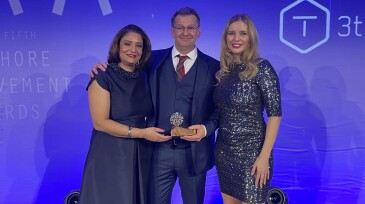
Fennex has picked up more than £250,000 in new contacts as well as the Innovation Award at the SPE Aberdeen Offshore Achievement Awards.
-
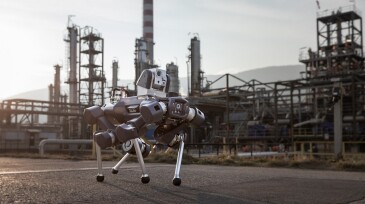
Swiss robotics company ANYbotics introduced ANYmal X, the first explosion-proof legged robot, at the Offshore Technology Conference Asia.
-
The company uses unmanned aerial vehicles to measure methane offshore.
-
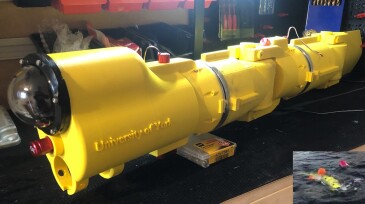
Verlume and consortium partners are working to advance the development of a robotic fish designed for efficient offshore inspection.
-
Data science plays an increasing role in the fight against climate change. As we use data science to develop innovative solutions to climate change, we should be careful not to replicate, or worsen, existing inequities—or create new ones.