Data & Analytics

Working with Dell Technologies and NVIDIA, the French supermajor is targeting improved seismic processing and artificial intelligence applications.

A discussion at the inaugural executive breakfast convened by the SPE Data Science and Engineering Analytics Technical Section, held alongside CERAWeek by S&P Global and powered by Black & Veatch, tackled the challenge of value creation from artificial intelligence in the energy industry.

AI‑driven data center growth is straining US power grids and accelerating interest in enhanced geothermal systems as a scalable, low‑carbon solution.
-
 Increasing accuracy in models is often obtained through the first steps of data transformations. This guide explains the difference between the key feature-scaling methods of standardization and normalization and demonstrates when and how to apply each approach.
 -
Rapid development of more-accurate simulator engines has given researchers the opportunity to generate sufficient data to train robotic policies for real-world deployment. However, moving from simulation to reality remains one of the greatest challenges of modern robotics.
-
Researchers have created software that borrows concepts from Darwinian evolution, including “survival of the fittest,” to build AI programs that improve generation after generation without human input.
-
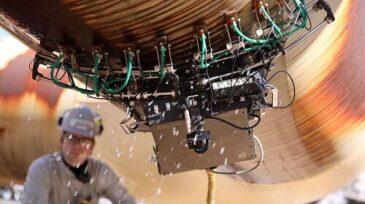
Gecko Robotics is providing the energy industry with artificial-intelligence-enabled robots to inspect infrastructure and supply massive amounts of data to help predict failures before they occur.
-
The AI journey starts with a single step, but too many companies take the wrong first step.
-
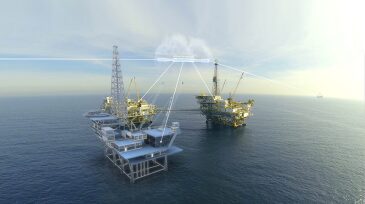
The words "disruption" and "change" are becoming more and more common in many industries, including offshore oil and gas.
-
There is often an assumption that big data, together with machine learning, will solve whatever problems asset-heavy industries such as oil and gas face. This is not the case; big data alone isn’t enough. We need something else to solve these problems, and the answer lies in the world of physics.
-
AltaML has announced a partnership with engineering and design firm Kleinfelder in which the two companies will pair 3D reality scans of facilities with artificial intelligence to look for potential problems and risks.
-
Researchers with the National Center for Airborne Laser Mapping at the University of Houston are creating a set of algorithms that would allow users to more-precisely align data sets collected at different times and reliably estimate changes between images captured at different times.
-
In partnership with TechnipFMC, DNV GL opened a pilot project for the international collaboration of operators and the supply chain. Many digital twins represent an asset’s initial form and struggle to reflect developments in their physical counterparts as the asset matures.