Data & Analytics

Working with Dell Technologies and NVIDIA, the French supermajor is targeting improved seismic processing and artificial intelligence applications.

A discussion at the inaugural executive breakfast convened by the SPE Data Science and Engineering Analytics Technical Section, held alongside CERAWeek by S&P Global and powered by Black & Veatch, tackled the challenge of value creation from artificial intelligence in the energy industry.

AI‑driven data center growth is straining US power grids and accelerating interest in enhanced geothermal systems as a scalable, low‑carbon solution.
-
 Artificial intelligence is already part of the work done in an office near you, and, before you know it, it will be in your office as well. Gaining familiarity and an understanding of it will serve you well.
 -
Time-stamped data anomalies can lead to more-accurate identification and faster diagnosis.
-
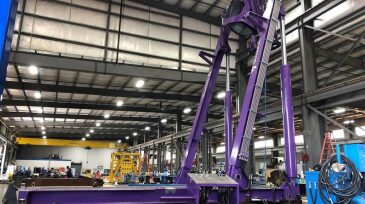
The A-frame is DNV certified. TechnipFMC’s ROVs will deploy in GoM later this year.
-
As the world’s top oil producers prepared for a weeklong meeting in April to plan a response to slumping prices of crude, espionage hackers commenced a sophisticated spearphishing campaign that was concentrated on US-based energy companies.
-
"Sooner or later, we will get machines that are at least as intelligent as humans are," says Christof Koch, chief scientist and president of the Allen Institute for Brain Science in Seattle, Washington.
-
As can be common in many technical fields, the landscape of specialized roles is evolving quickly. With more people learning at least a little machine learning, this could eventually become a common skill set for every software engineer.
-
To keep pace with the digital age, the critical infrastructure and automation industries are looking beyond today’s control systems for new, common technologies to help balance requirements for uptime with digital technologies. Open standards can help.
-
The future of intelligent operations in our industry is being driven by advances from other sectors that have been embraced for petroleum applications. Foundational changes already taking place include advances in the type and volume of data being acquired and how the data are used.
-
This paper describes an automated work flow that uses sensor data and machine-learning (ML) algorithms to predict and identify root causes of impending and unplanned shutdown events and provide actionable insights.
-
The complete paper presents a discussion of the use of intelligent well completion in Santos Basin Presalt Cluster wells.