Decarbonization

TotalEnergies signed off for 30% operated stakes in the Lang Lebah and B14 gas fields offshore Sarawak on the sidelines of ADIPEC in Abu Dhabi, while also highlighting methane-reduction partnerships in Angola, India, and Southeast Asia.

This SPE technical section editorial synthesizes six technical themes shaping CO2 transport and storage and interprets them through a petroleum engineering capability lens.
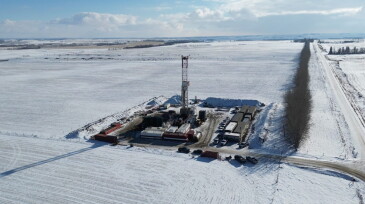
The Pawnee Carbon Sequestration Project, which would use a repurposed well, is planned to capture and store up to 400,000 tonnes of carbon dioxide, with first injection targeted for early 2027.
-
 The Origins hub in Alberta, with plans to begin operations in January 2027, is expected to store up to 1.5 mtpa of carbon dioxide initially, with room to grow.
-
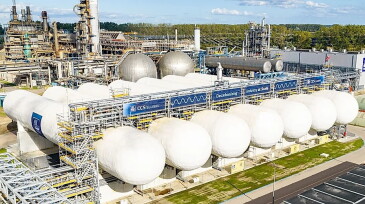
The Yara Sluiskil facility in the Netherlands expects to capture and liquefy 800,000 tons of carbon dioxide annually. The carbon dioxide is to be transported by Northern Lights vessels to Øygarden, Norway, where it will be stored.
-
This paper presents an experiment investigating dissolution of basaltic primary minerals and conditions favorable for secondary phase formation under deep subsurface storage conditions.
-
This study aims to investigate the efficacy of chemical additives strontium chloride and barium hydroxide in accelerating CO₂ trapping mechanisms, their effect on dissolution of carbonate-bearing minerals, and resulting poroelastic changes in the host rock.
-
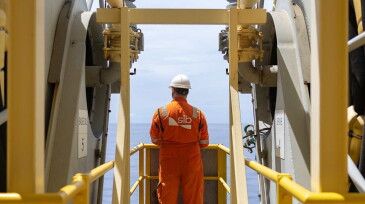
This paper describes the potential of combined-cycle technology (use of a gas turbine and a steam turbine together to turn fuel into electricity) in offshore carbon-capture applications.
-
This study reviews subsurface microbial activity, biomineralization reactions, and mechanisms prevalent for bioremediating wells, stabilizing cements, and increasing trapping during CO₂ injection and storage.
-
The world produces vast volumes of carbon dioxide, and CO₂-EOR is one of the best-established techniques for increasing oil production. Despite this, its use remains limited because of economic, logistical, and operational challenges.
-
This paper uses the structural-integrity-management framework to evaluate the current structural integrity of chosen platforms, highlighting their potential and limitations for carbon capture, use, and storage purposes based on in-service assessments.
-
With millions of wells having been drilled in the US since the beginning of the oil age, the land is pocked with old, unused wellbores. For most, repurposing is a pipe dream. Plugging is the best option.
-
Integrated engineering work from SLB aims to support development of the large-scale Havstjerne carbon storage project ahead of a final investment decision.