Decarbonization
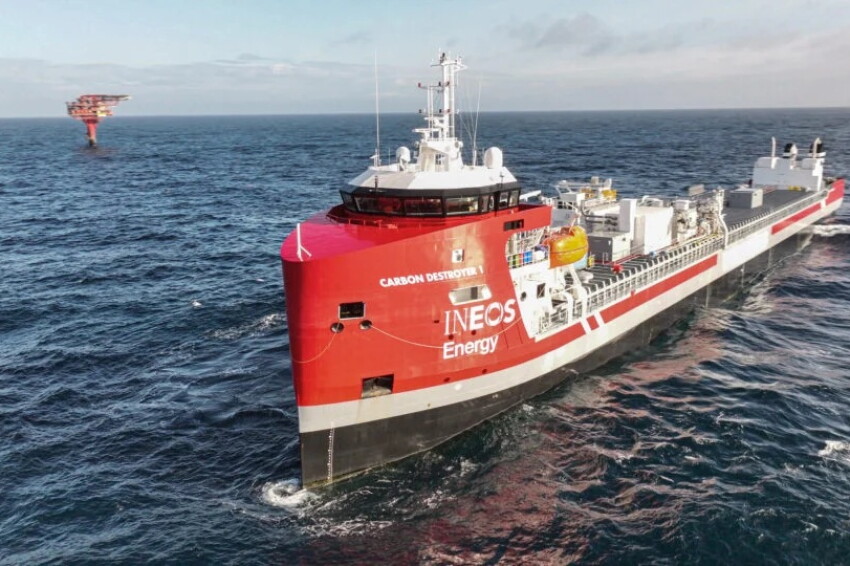
Plans call for the Greensand project to store 400,000 tonnes of carbon dioxide annually, with the potential to store up to 8 million tonnes annually at full capacity.
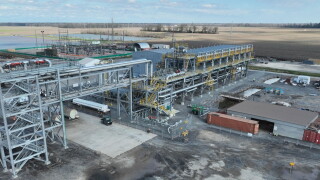
In line with its recently released Global Outlook, the major has begun storing carbon dioxide from Nucor’s iron facility in Convent, Louisiana.
Natural Resources Canada has awarded $4 million to Next Hydrogen and CERT Systems to advance clean hydrogen production and low-carbon sustainable aviation fuel technologies in the Greater Toronto Area.
-
 This paper describes the operator’s initiative to reduce greenhouse-gas emissions and recover additional hydrocarbon, monetizing it as sales gas, by integrating upstream and downstream gas facilities in a unified approach.
 -
The North Sea Transition Authority said it expects interest in carbon storage to grow after UK’s second licensing round.
-
Propelling a proposed CCS project from the drawing board to first carbon storage requires overcoming several hurdles.
-
The North Sea Transition Authority has advanced the UK’s plans for carbon storage by approving the drilling of a proposed appraisal well off the coast of Teesside.
-
Smart Seismic Solutions plans to use 50,000 nodes to examine storage potential for the Greenstore CCS project.
-
Ir Mohd Yusri Mohamed Yusof spoke with JPT about the national oil company’s carbon capture and storage efforts, the value of cross-border cooperation, and his expectations for OTC Asia, to be held 31 March–2 April 2026 in Kuala Lumpur.
-
The company said it has started transporting and storing carbon dioxide in its second carbon capture and storage operation in the state.
-
This paper reviews the simultaneous supercritical CO2/brine aquifer injection and water-alternating-gas methods for geologic carbon sequestration and proposes a novel integration with saltwater-disposal wells.
-
In the past year, publications on CO2, natural gas, and hydrogen storage have increasingly focused on the design, evaluation, and optimization of storage plans. These efforts encompass a broad spectrum of challenges and innovations, including the expansion of storage reservoirs from depleted gas fields and saline aquifers to stratified carbonate formations and heavy-o…
-
In this paper, the authors review and draw lessons from the many firsts in the Teesside CO2 transportation and storage infrastructure project.